

Table of Contents
Sunlight Effects on Skin
How does Sunlight cause sunburn and other effects on the skin when there is excessive exposure to the sun? Sun is a good source of light and heat energy and we can not think of life without sunlight. Other than its beneficiary effects we have seen specific problems with excessive exposure to sunlight.
- Sunburn
- Suntan
- Hyperpigmentation
- Actinic keratosis
- Bown’s disease
- Erythema
- Chemical hypersensitivity
- Eye damage
- Bleaching of the skin,
- Predisposition toward skin cancers, including malignant melanoma.
- Squamous cell carcinoma
What should be done for protection from sunlight?
The mildest form of sunscreen you should use is one with a sun protection factor (SPF) of 15, which gives you 93% protection. Getting used to a hot climate can take a week to several weeks, depending on how hot it is and how humid it feels. It’s a good idea to wear clothes made of natural materials like cotton and linen so that air can flow through them. Light-colored clothes reflect light and are better than dark ones. Because sweat has both water and salt, it’s essential to replace the salt by eating salty foods or adding extra salt to your meals. On hot days when you’re not doing intense exercise, the average person should drink at least 1.5 liters of fluids.
How does Sunlight Benefit us?
- Sunlight is a rich source of Light and Heat Energy
- Sunlight is a source of Vitamin D
Our skin makes vitamin D when exposed to sunlight, derived from exposure to UV rays of the sunlight which convert the cholesterol in the skin to vitamin D. Vitamin D3 is not a dietary requirement at all in conditions of adequate sunlight. It can be synthesized in the body in adequate amounts by simple exposure to sunlight even for 5 minutes per day. Vitamin Dis is synthesized by the body by the action of UV rays of sunlight on 7-dehydrocholesterol, which is stored in large abundance in the skin. Exposure to UV rays is critical; these can be filtered off by air pollution. Dark-skinned races such as Negros, also suffer from this disadvantage because black skin can filter off up to 95 percent of UV rays. It is important that children must be exposed to sunlight. Sunbath is taken in many regions of the world for combating vitamin D deficiency and for skin pigmentation.
- Sunlight kills bacteria
Direct and continuous exposure to sunlight is destructive to many disease-producing organisms. sunlight plays its own part by oxidizing impurities and killing bacteria. The ultraviolet rays of sunlight (these do not penetrate through glass) are particularly lethal to bacteria and some viruses. Articles such as linen, bedding, and furniture may be disinfected by exposure to direct sunlight for several hours. Organisms can be killed relatively easily by ultraviolet (UV) light at 254 nm wavelength, sunlight, heat, and disinfectants.
Sunlight Contains Which Rays?
UV rays
Let us explore how we get sunlight from the Sun and what types of rays are reaching our world. As the sunlight approaches Earth, it encounters our planet’s atmosphere, which is a mixture of gases. The atmosphere plays a crucial role in allowing sunlight to reach us while also filtering out harmful radiation. The rays named ultraviolet rays are of different wavelengths and intensities. Ultraviolet (UV) radiation, which is invisible to the human eye, is responsible for various effects, including triggering the production of vitamin D in our skin and causing sunburn. These are:
- UVA: These are the longest wavelengths. It affects the skin dermis so it does not make you tan but causes skin aging and DNA damage.
- UVB: A s it affects the epidermis of the skin so it makes you tanned and may cause redness, burn, and even cancer.
- UVC: These are the shortest wavelengths, they can not reach the earth so they are harmless.
Sunlight Effects on the Human Body:
Understanding Sunburn Causes
How sunlight causes sunburn is an important thing to understand. Sunburn is a condition characterized by heated and sensitive skin resulting from excessive exposure to sunlight. It can lead to skin flaking and subsequent peeling over a few days. You can manage sunburn independently, and typically, it improves within a week’s time.
To determine if you are experiencing sunburn, you might observe the following signs on your skin within 2-4 hours:
- The skin might feel warm when touched.
- There could be sensations of tenderness or pain.
- The skin may begin to flake or peel, often occurring a few days after sunburn.
- In severe cases, the skin might develop blisters after 12-24 hours of exposure.
Self-Relief for Sunburn:
- Seek shade or get indoors promptly to avoid further sun exposure.
- Soothe your skin with a cool shower, bath, or a damp cloth (be cautious not to chill infants or young children).
- Apply after-sun creams or sprays to alleviate discomfort.
- Stay well-hydrated by drinking ample water to cool your body and prevent dehydration.
- If you’re experiencing pain, consider taking pain relievers like paracetamol or ibuprofen.
- Shield sunburnt skin from direct sunlight until it has completely healed.
Actions to Avoid if you are having Sunburn:
- Refrain from using petroleum jelly on sunburned skin.
- Avoid placing ice or cold packs directly on sunburned skin.
- Do not attempt to puncture or remove blisters that may form.
- Resist the urge to scratch or peel away flaking skin.
- Avoid wearing tightly fitting clothing over areas affected by sunburn.
Treatment of Skin effected by Sunburn:
- Analgesics
- Cool baths
- Moisturizers
Skin Pigmentation
Skin pigmentation is common in exposed parts of bodies. It might be related to type of your work, sunbath and outdoor activities. Skin pigmentation is most commonly seen in light color and white skin.
- Sun Tan
The increase in pigmentation (tanning) results from a migration of melanin pigment into more superficial skin cells and increased melanin pigment production.
- Melasma
Areas that receive excessive sun exposure, including the cheeks, the upper lip, the chin, and the forehead, are the most common locations for hyperpigmentation. Macular symmetrical facial pigmentation. It is caused by exposure to UV radiation, pregnancy, and genetic predisposition.
Melasma Treatment:
Strict sun avoidance often in combination with a topical combination of hydroquinone cream. A chemical peel or laser treatment may help in some cases.
- Solar lentigo
SPF meaning?
SPF is a Skin protection factor, different skin types have different factors to be used for sun protection. SPF is the ratio of the amount of UV energy needed to produce erythema on protected skin to the amount of UV energy needed to produce erythema on unprotected skin.
So you must know your skin type to protect yourself from sun rays by using SPF sunblocks.
Skin Cancers due to Sun exposure
- Actinic Keratosis: precancerous scaly spots
- Bowen’s Disease
- Basal Cell Carcinoma
- Squamous Cell Carcinoma
- Melanoma
Sunlight is definitely a cause of nonmelanoma skin cancers (squamous and basal cell carcinomas), as evidenced by the observations that these tumors tend to occur on exposed parts of the body, the risk increases with the amount of sun exposure, and incidence rates are greater in light-skinned than in dark-skinned individuals. However, these skin cancers are rarely deadly, and routine data on nonmelanoma skin cancer are not collected by cancer registries in the United States.
Causes of melanoma:
The causes of melanoma are predominantly related to sun exposure. The relationship of cutaneous malignant melanomas to sunlight is more complicated. Various types of sun exposure have been reported to be associated with melanoma, ranging from severe sunburns, occupational activities, vacation sun exposure, beach activities, other recreational activities, cumulative or chronic sun exposure, and early migration to sunny places. Incidence rates for cutaneous melanoma are highest in individuals with little natural skin pigmentation, often with intermittent sun exposure such as sunburns or sunny vacations. Investigation of migrants to Australia provided evidence that sun exposure at an early age or long-term exposure may be of particular importance. Early UV exposure is of concern with the expanding popularity of tanning beds and booths. Current evidence suggests an increase in melanoma risk among tanning bed users. Modern tanning bed units have UV levels comparable to tropical sunlight and irradiate almost 100% of the skin, which is assumed to be 2–10 times more skin surface area than sunlight exposure.
Incidence Rates of Melanoma
Incidence rates may increase as younger populations expose more of their bodies to such units. In the white U.S. population, incidence rates of melanomas of the skin have dramatically increased over the last few decades, due in part to changes in diagnostic criteria and enhanced awareness of the importance of early evaluation of melanotic lesions. Melanoma increases with age (the mean age at diagnosis is about 57). While the relationship between cutaneous melanoma and specific types of sun exposure is complex, the American Cancer Society estimates that nearly all skin cancers are related to UV radiation (even familial cancers that are likely related to genetic and UV radiation). Because nonmelanotic skin cancers are common and largely attributable to sun exposure, sunlight accounts for approximately 40% of all neoplasms. Sunlight accounts for less than 2% of cancer deaths since these neoplasms are infrequently fatal. Since only cutaneous melanoma is routinely collected and reported by cancer registries, less than 2% of reported cancers are due to UV radiation. All individuals, but particularly those with light skin who burn easily, should be encouraged to avoid excessive direct exposure to intense sunlight and to use sunshades and sunscreens.
Other Types of Skin Cancers
More than 90% of skin cancers occur on parts of the body exposed to sunlight. Approximately 40% of all cancers in the United States are skin cancers, and in general, they are the most common malignancy in light-skinned populations. Rates for skin cancer vary from less than 2 cases per 100,000 in dark-skinned people to more than 100 per 100,000 in South African whites and Australians. The incidence of skin cancer on a worldwide basis correlates with decreasing latitude. Great excesses of skin cancer occur among persons with outdoor occupations such as agricultural, forestry, and marine activity. Most skin cancers in humans are epithelial cell origin, most commonly noted as basal cell carcinomas followed in frequency by squamous cell carcinomas followed in frequency by melanomas. Some individuals, for example, those with xeroderma pigmentosum, have particular sensitivity to ultraviolet radiation and are at increased risk for developing disease on exposure. Early detection and treatment are required for a better prognosis of cancer.
Prevention of Skin Cancers
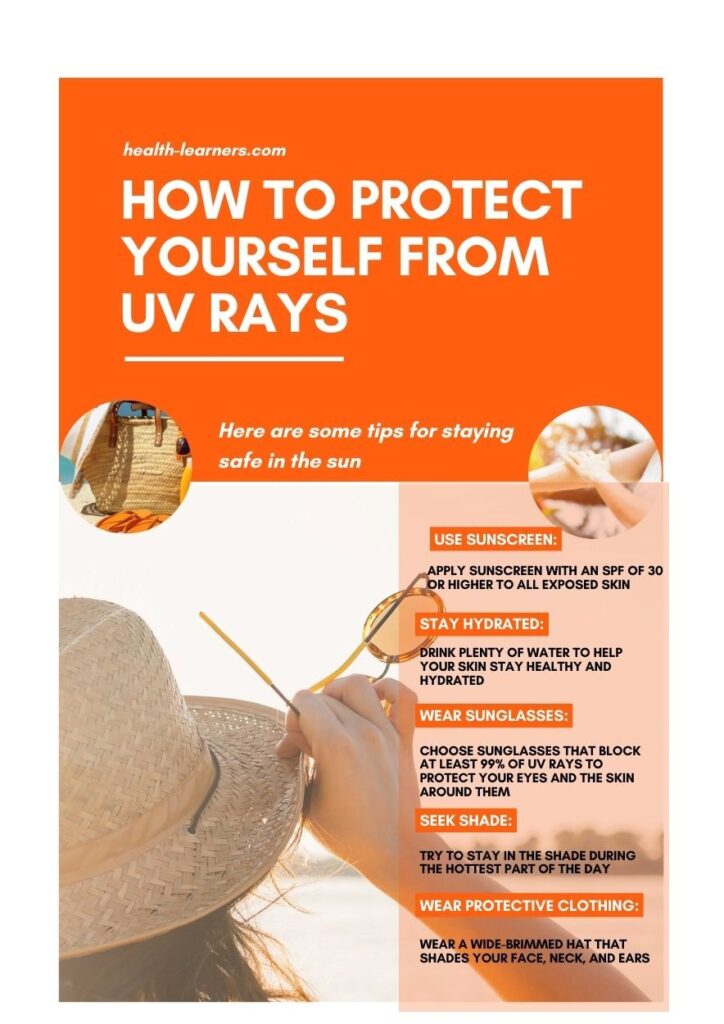
- Sunscreen: Use a broad-spectrum sunscreen with at least SPF 30 every day, even on cloudy days. Apply it generously to all exposed skin, and remember to reapply every two hours, especially if you’re swimming or sweating.
- Cover Up: Wear protective clothing like wide-brimmed hats, long-sleeved shirts, and sunglasses with UV protection. This helps to shield your skin from direct sunlight.
- Seek Shade: Limit your time in the sun, especially during its strongest hours between 10 a.m. and 4 p.m. If you’re outdoors, try to stay in the shade as much as possible.
- Avoid Tanning Beds: Artificial UV radiation from tanning beds is harmful and increases your risk of skin cancer. It’s best to avoid them altogether.
- Check Your Skin: Regularly examine your skin for any changes, including new moles, growths, or spots that change in size, color, or shape. If you notice anything unusual, consult a dermatologist.
- Stay Hydrated: Drinking enough water keeps your skin hydrated and helps maintain its health and resilience.
- Healthy Diet: Eating a balanced diet rich in fruits, vegetables, and antioxidants can contribute to overall skin health.
- Stay Hydrated: Drinking enough water keeps your skin hydrated and helps maintain its health and resilience.
- Avoid Smoking: Smoking damages your skin and increases the risk of skin cancer, so quitting or avoiding smoking can be beneficial.
- Stay Informed: Educate yourself about the risk factors, early signs, and types of skin cancers. Being informed helps you take proactive steps to protect your skin.
Treatment of Skin Cancers
There are certain treatment options but it depends upon the type and stage of the disease. So specialist consultation is required for specific diagnosis and treatment options of disease. Here are some common treatment options that are done on a case-to-case basis after confirmation of diagnosis and with specialist consultation.
| Treatment method | Melanoma | Squamous Cell Carcinoma(SCC) | Basal Cell Carcinoma (BCC) |
|---|---|---|---|
| Basal Cell Carcinoma (BCC) | Surgical removal, sentinel lymph node biopsy | Surgical excision, Mohs surgery | Surgical excision |
| Radiation Therapy | Used for advanced cases, post-surgery treatment | Used for advanced cases, post-surgery treatment | Used for patients who can’t undergo surgery |
| Immunotherapy | Checkpoint inhibitors (pembrolizumab, ipilimumab) | Immune Checkpoint inhibitors | not commonly used |
| Targeted Therapy | Drugs targeting specific genetic mutations | Used for advanced cases with specific mutations | Used for advanced or hard-to-treat cases with specific mutations |
| Chemotherapy | Used in advanced cases | Used in advanced cases | not commonly used |
| Topical medication | Not commonly used | used for superficial lesions | used for superficial lesions |
| lymph node surgery | Sentinel lymph node biopsy | Lymph node dissection if spread | not used |
Discussion and Conclusion
Sunlight in addition to its beneficial effects poses certain harmful effects to our skin. We must be aware of how to use sunlight for our health and protect ourselves from its harmful effects from minor sunburn to skin cancers.
In conclusion, while sunlight offers numerous beneficial effects on our overall health and well-being, it’s crucial to acknowledge and address the potential harm it can cause to our skin. The sun’s ultraviolet (UV) radiation, while responsible for vitamin D synthesis and mood enhancement, can also lead to adverse consequences, ranging from minor sunburn to the development of skin cancers. Practicing safe sun exposure involves striking a balance between reaping its benefits and minimizing its risks. Utilizing protective measures like sunscreen, clothing, and seeking shade during peak hours can significantly reduce the chances of sunburn and the long-term damage that accumulates over time. Regular self-checks and professional skin evaluations aid in detecting early signs of potential issues, enabling timely intervention and treatment.
