

Did you know that over 6 million adults in the United States are living with heart failure? This high incidence underscores the importance of understanding this condition, especially its progressive nature. This blog post will guide you through the four stages of congestive heart failure (CHF), empowering you with the knowledge to recognize symptoms, understand treatment options, and ultimately, take control of your heart health. We’ll delve into what each stage entails, explore the underlying causes, and discuss how to effectively manage this chronic condition. By the end of this article, you’ll have a comprehensive understanding of CHF and the resources available to support you or your loved ones through every step of the journey.
Table of Contents
Overview of Congestive Heart Failure
Congestive heart failure, often abbreviated as CHF, isn’t about the heart stopping altogether. Instead, it describes a condition where the heart muscle weakens and can no longer pump blood efficiently enough to meet the body’s demands. This inefficiency leads to a buildup of fluid in the lungs and other parts of the body. Think of it like a pump that’s losing its power: the water pressure drops, and the system can’t function optimally. Similarly, in CHF, the heart struggles to deliver oxygen and nutrients, causing a cascade of symptoms that can severely impact quality of life. As the condition progresses, the symptoms worsen, requiring increasingly complex management strategies. The physiological changes associated with CHF are complex, involving hormonal imbalances, fluid retention, and changes in heart structure. Globally, heart failure affects millions, posing a significant public health challenge. In the US alone, it’s a leading cause of hospitalization, especially among those over 65.

III. The Four Stages of Congestive Heart Failure
The progression of CHF is classified into four stages, each marked by specific symptoms and treatment approaches. Understanding these stages is crucial for effective management:
- Stage I (Pre-Heart Failure): This stage represents a critical window of opportunity. While there are no noticeable symptoms yet, individuals are identified as high-risk due to factors like high blood pressure, diabetes, coronary artery disease, or a family history of CHF. Early intervention at this stage, focusing on lifestyle modifications and risk factor management, can significantly delay or even prevent the progression to symptomatic heart failure. This includes adopting a heart-healthy diet, regular exercise, and strictly managing existing conditions like hypertension and diabetes. Imagine this stage as laying the foundation for a strong, resilient house – the stronger the foundation, the better it can withstand future storms.
- Stage II (Mild Heart Failure): As CHF progresses to stage II, subtle symptoms begin to emerge, often after physical exertion. Individuals might experience shortness of breath with activity, fatigue, and slight swelling in the ankles and feet. These symptoms often mimic those of other conditions, making early diagnosis crucial. Diagnostic procedures at this stage might include an echocardiogram to assess heart function and blood tests to evaluate kidney and liver function. Treatment typically involves lifestyle changes, alongside medications like ACE inhibitors or beta-blockers to help the heart pump more efficiently.
- Stage III (Moderate Heart Failure): In stage III, symptoms become more pronounced and interfere with daily activities. Shortness of breath becomes more noticeable, even with minimal exertion, and fatigue becomes persistent. Swelling in the legs and feet worsens, and fluid may accumulate in the lungs, leading to coughing and wheezing. Consider a patient who used to enjoy gardening but now finds it exhausting after just a few minutes. This illustrates the impact of stage III CHF on daily life. Treatment at this stage becomes more complex, often requiring a combination of medications, including diuretics to reduce fluid buildup. Cardiac resynchronization therapy, a type of pacemaker, might also be considered.
- Stage IV (Severe Heart Failure): This is the most advanced stage of CHF, characterized by severe symptoms even at rest. Patients experience significant shortness of breath, chest pain, and pronounced swelling. Daily activities become extremely limited, and hospitalizations become more frequent. At this stage, the focus often shifts from managing symptoms to improving quality of life and providing comfort. Advanced treatments like heart transplantation or left ventricular assist devices (LVADs) may be considered. Palliative care becomes increasingly important, focusing on pain management and emotional support for both the patient and their family.
IV. Symptoms of Congestive Heart Failure
CHF manifests through a range of symptoms, varying in intensity depending on the stage and individual factors:
- Early Stages: Fatigue, shortness of breath with exertion, swelling in the ankles and feet, and a persistent cough.
- Later Stages: Severe shortness of breath even at rest, chest pain, rapid heart rate, persistent coughing or wheezing with white or pink-tinged phlegm, fluid buildup in the abdomen (ascites), sudden weight gain, and decreased alertness or confusion.
Early recognition of these symptoms is crucial for timely medical intervention. Consult a healthcare provider immediately if you experience any of these, especially if they worsen suddenly.
V. Causes of Congestive Heart Failure
Several factors can contribute to the development of CHF:
- Coronary Artery Disease (CAD): Narrowed arteries reduce blood flow to the heart, weakening the muscle over time.
- High Blood Pressure: Chronic high blood pressure forces the heart to work harder, eventually leading to muscle damage.
- Heart Valve Disorders: Faulty heart valves disrupt the normal flow of blood through the heart, straining the muscle.
- Cardiomyopathy: Diseases of the heart muscle itself can impair its ability to pump effectively.
- Congenital Heart Defects: Structural abnormalities present at birth can contribute to CHF later in life.
- Diabetes: High blood sugar levels can damage blood vessels and nerves, increasing the risk of heart failure.
Lifestyle factors like smoking, excessive alcohol consumption, and obesity can also significantly increase the risk.
VI. Diagnosis of Congestive Heart Failure
Diagnosing CHF involves a combination of:
- Medical History: A thorough review of symptoms, past medical conditions, and family history.
- Physical Exam: Listening to the heart and lungs, checking for swelling, and evaluating other physical signs.
- Diagnostic Tests:
- Electrocardiogram (ECG): Records the heart’s electrical activity.
- Echocardiogram: Uses ultrasound to create images of the heart’s structure and function.
- Blood Tests: Assess kidney and liver function, as well as markers of heart damage.
- Cardiac Catheterization: A thin tube is inserted into the heart to measure pressures and assess blood flow.
VII. Managing Congestive Heart Failure
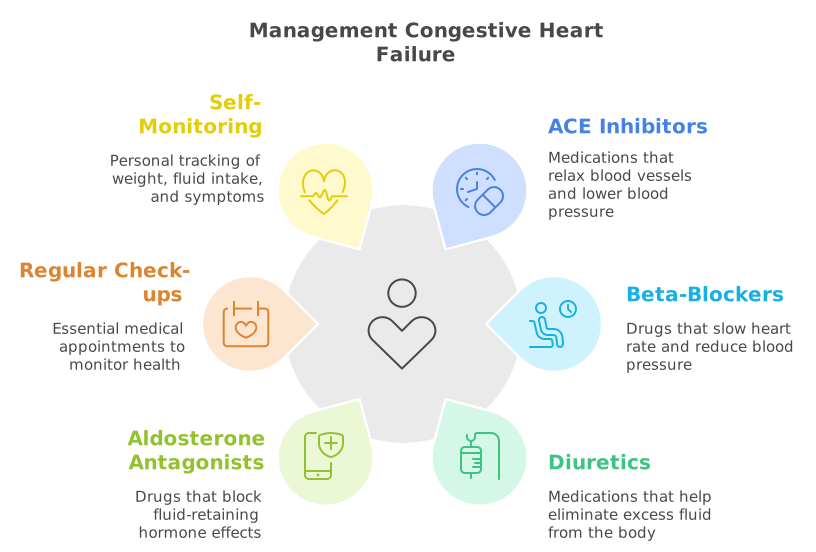
Managing CHF effectively requires a multifaceted approach:
- Lifestyle Changes:
- Heart-Healthy Diet: Focus on fruits, vegetables, whole grains, and lean proteins. Limit salt, saturated fats, and processed foods.
- Regular Exercise: Engage in moderate-intensity aerobic exercise, as tolerated. Consult with a healthcare provider for a personalized exercise plan.
- Weight Management: Maintain a healthy weight to reduce strain on the heart.
- Smoking Cessation: Quitting smoking is crucial for improving heart health.
- Limit Alcohol Intake: Excessive alcohol consumption can worsen CHF.
- Medications: Several medications are used to manage CHF, including:
- ACE Inhibitors: Relax blood vessels and reduce blood pressure.
- Beta-Blockers: Slow the heart rate and reduce blood pressure.
- Diuretics: Help eliminate excess fluid from the body.
- Aldosterone Antagonists: Block the effects of aldosterone, a hormone that contributes to fluid retention.
- Monitoring: Regular check-ups with a healthcare provider are essential to monitor disease progression and adjust treatment as needed. Self-monitoring of weight, fluid intake, and symptoms is also crucial.
VIII. Potential Complications and Prognosis
CHF can lead to several complications, including:
- Kidney Damage: Reduced blood flow to the kidneys can impair their function.
- Liver Damage: Fluid buildup can affect liver function.
- Arrhythmias: Irregular heartbeats can be dangerous and require treatment.
- Pulmonary Edema: Fluid buildup in the lungs can cause severe breathing difficulties.
The prognosis for CHF varies depending on the stage, underlying causes, and individual factors. While there’s no cure, effective management can significantly improve quality of life and extend life expectancy.
IX. Empowering and Encouraging Those with CHF
Living with CHF can be challenging, but with the right support and resources, individuals can lead fulfilling lives. Here are some tips:
- Connect with Support Groups: Sharing experiences with others facing similar challenges can provide emotional support and practical advice.
- Educate Yourself: Understanding the condition and its management empowers patients to take an active role in their care.
- Prioritize Self-Care: Engage in activities that promote physical and emotional well-being, such as gentle exercise, relaxation techniques, and spending time with loved ones.
X. Conclusion
Congestive heart failure is a serious condition, but with early diagnosis and comprehensive management, individuals can live long and productive lives. By understanding the four stages of CHF, recognizing the symptoms, and adopting healthy lifestyle choices, you can take proactive steps to protect your heart health. Don’t hesitate to reach out to your healthcare provider if you have any concerns. Remember, knowledge is power, and taking control of your health is the first step towards a healthier, happier future.
XI. Additional Resources
- American Heart Association: www.heart.org
- Heart Failure Society of America: www.hfsa.org
