

Monkeypox (now named as MPOX) is declared as an outbreak by World Health Organization. MPOX is putting people at risk of potentially dangerous emerging pathogen which resembles small pox. MPOX has become the Public Health Emergency of International concern (PHEIC) as it spreads through close contact. Its epidemiological patterns and clinical outcomes are of major concerns for health authorities, communities and stakeholders worldwide. In order to control the MPOX outbreaks and to minimize its zoonotic transmission it is important to understand the disease pattern and symptoms.
Monkeypox Outbreak
Monkeypox outbreak was reported in May 2022 in 117 countries. MPOX has been declared as Public Health Emergency of International Concern (PHEIC). This spread presents a public health risk to other member states and requires a coordinated international response. High risk areas are Eastern Democratic Republic of the congo and neighboring countries. Moderate risk areas are Nigeria and countries of West, Central and East Africa and other countries.
Transmission
- Animal to Animal
- Animal to Human
- Human to Human
Mode of transmission
- contact with body fluids
- lesions on skin
- respiratory droplets
- sexual contact (homosexual, bisexual)
- contaminated objects
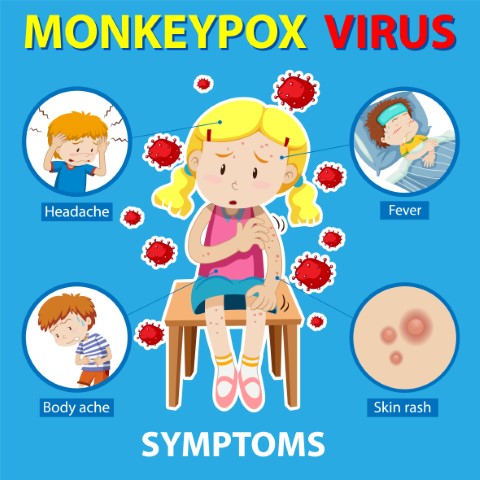
Symptoms
- fever
- fatigue
- headache
- myalgia
- cough
- lymphadenopathy
- lymphadenectasis
- skin rash starts from head and face and then spread to the body
- conjunctivitis
- pneumonia
Diagnosis
- PCR
- specimen taken from infected skin, fluid or rash
Treatment of Cases
Treatment of cases is symptomatic treatment. Patient is isolated and managed for his symptoms of fever, cough, body aches and pain.
In a small prospective cohort study those patients whoa are treated with Tocovirimat in an early stage have reported to recover early as compare to those who were not treated within that window period. This drug has proved to prevent progression of disease in infected persons with MPOX.

mpox prevention by vaccine
Vaccine for MPOX
Vaccine for MPOX is effective upto 85% for prevention of monkeypox. Bavarian Nordic firms have an MPOX vaccine, that can manufacture 10 million doses of vaccine by 2025 and can supply 2 million doses this year. the company will work with CDC and WHO to make vaccine accessible to all countries. The Global vaccine group GAVI has upto $500 million to spend on getting shots to affected countries.
Smallpox/MPOX vaccines are composed of live vaccinia virus (another orthopoxvirus). It is 80-85% effective in protecting people from MPOX clade I MPXV.
- Vaccine for adults: 2 doses of modified Ankara strain of vaccinia.
- Vaccine for adults and children: one dose LC 16-KMB.
- Other vaccines are in development.
Control of MPOX
Since the first outbreak of Monkeypox in 2022 it has been observed that its outbreaks can occur anywhere. Due to its human to human transmission there is ongoing risk for all countries.
- Prevent exposure
- Prevent transmission through sexual or non-sexual networks.
- Young and children must be protected
- Identify the areas where cases are reported with good surveillance system or other means
- Planning implementation and long term actions
- Regular and systematic reporting through community engagement and health worker training
- Regional and Global reporting of all new cases.
- Assessment of all mode of transmissions
- Travel, events and gathering specific protections
- Genomic sequencing and sharing of lab based surveillance.
History of MPOX
History of MOX started in 1970 when first case of monkeypox was reported in Republic of Congo when smallpox vaccine was being introduced. Later in 1980 it was reported in East and West Africa, when smallpox was eliminated. In 2017 another case was reported in Nigeria and as number of cases increased by year 2022 global outbreak occurred in Europe and America. In 2023 it spread to South East Asia and Western Pacific regions. Now by July 2024 117 countries have reported its outbreak, so WHO has declared it as public health emergency of international concern.
the Global burden of MPOX since 2022 to July 2024 is:
- Cases: 102,997
- Deaths 223 where case fatality rate is 0.04%.
