
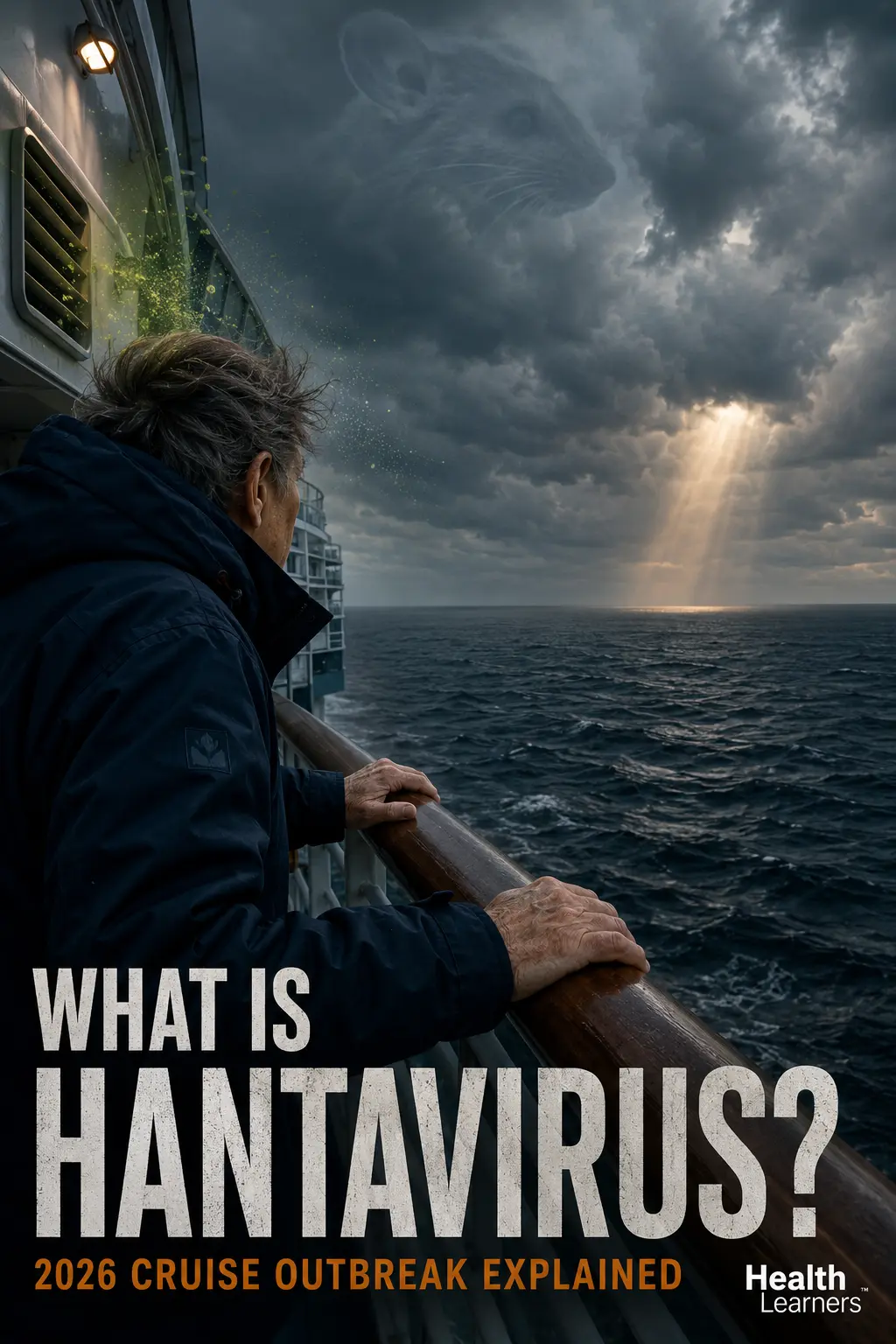
Rayan has been feeling off for three days. He chalks it up to sea legs — the South Atlantic crossing has been rough, and the buffet food seemed questionable at best. But the ache in his thighs is deep and strange, not like any muscle soreness he recognises. He has a headache that paracetamol won’t shift. His temperature is 38.4°C. His wife, Layla, texts him from the upper deck: she is feverish too. She was completely fine this morning. By the time the ship’s doctor sees them both that afternoon, two other passengers have already been escorted to the medical bay. The doctor’s expression is careful, controlled. She asks one question neither of them expected: “Have either of you spent time near rural areas in Argentina in the past six weeks?”
What happened next has nothing to do with seasickness or a bad meal. It has everything to do with a rodent, a virus, and a 42-day window during which neither of them knew they were already infected.
What Is Hantavirus — And Why Is It Dominating Global Health News Right Now?
Hantaviruses have existed alongside humans for decades. First formally documented during the Korean War in the 1950s, classified by the WHO in 1987, and for most of the years that followed: a specialist concern. A hazard for farm workers, hikers, and anyone who breathed in contaminated dust from a rodent-infested rural cabin in the American Southwest or South America.
That changed on 2 May 2026, when the World Health Organisation received notification of a cluster of severe respiratory illnesses aboard the MV Hondius — a Dutch-flagged expedition cruise ship returning from Argentina and Antarctica. WHO DON599 · May 2026 As of 9 May 2026, the outbreak has produced eight confirmed or suspected cases and three deaths, with patients hospitalised across six countries. Passengers who disembarked before the outbreak was identified have returned to more than a dozen nations — triggering international contact tracing operations and a CDC Level 3 travel advisory response.
Hantavirus is a family of over 50 rodent-borne RNA viruses causing two major syndromes: Hantavirus Pulmonary Syndrome (HPS) — a severe respiratory illness found in the Americas — and Hemorrhagic Fever with Renal Syndrome (HFRS), which primarily attacks the kidneys across Asia and Europe. Andes virus, responsible for the 2026 MV Hondius outbreak, causes HPS and holds a unique distinction: it is the only confirmed hantavirus capable of spreading directly between humans. CDC · WHO · 2026
Andes virus is not new. In 2018, a birthday party in the Argentine village of Epuyen became a super-spreader event: one introduction of the virus led to 34 infections and 11 deaths. CNN · May 2026 That capacity for person-to-person transmission — rare across the hantavirus family but documented specifically in this strain — is what makes the 2026 cruise outbreak medically significant. It is not an everyday hantavirus case. It is a demonstration of exactly what this virus can do when circumstances allow sustained close contact between an infected and an uninfected person.
Before panic sets in: the WHO’s global risk assessment remains low. Hantavirus does not spread like influenza. It does not drift through an airport or a supermarket. But understanding what it is, how it spreads, and what the early warning signs look like is not alarmism. It is practical medicine — and in the first 72 hours after a potential exposure, that knowledge could determine whether someone lives or dies.
How Hantavirus Spreads — and What Makes the Andes Strain Different
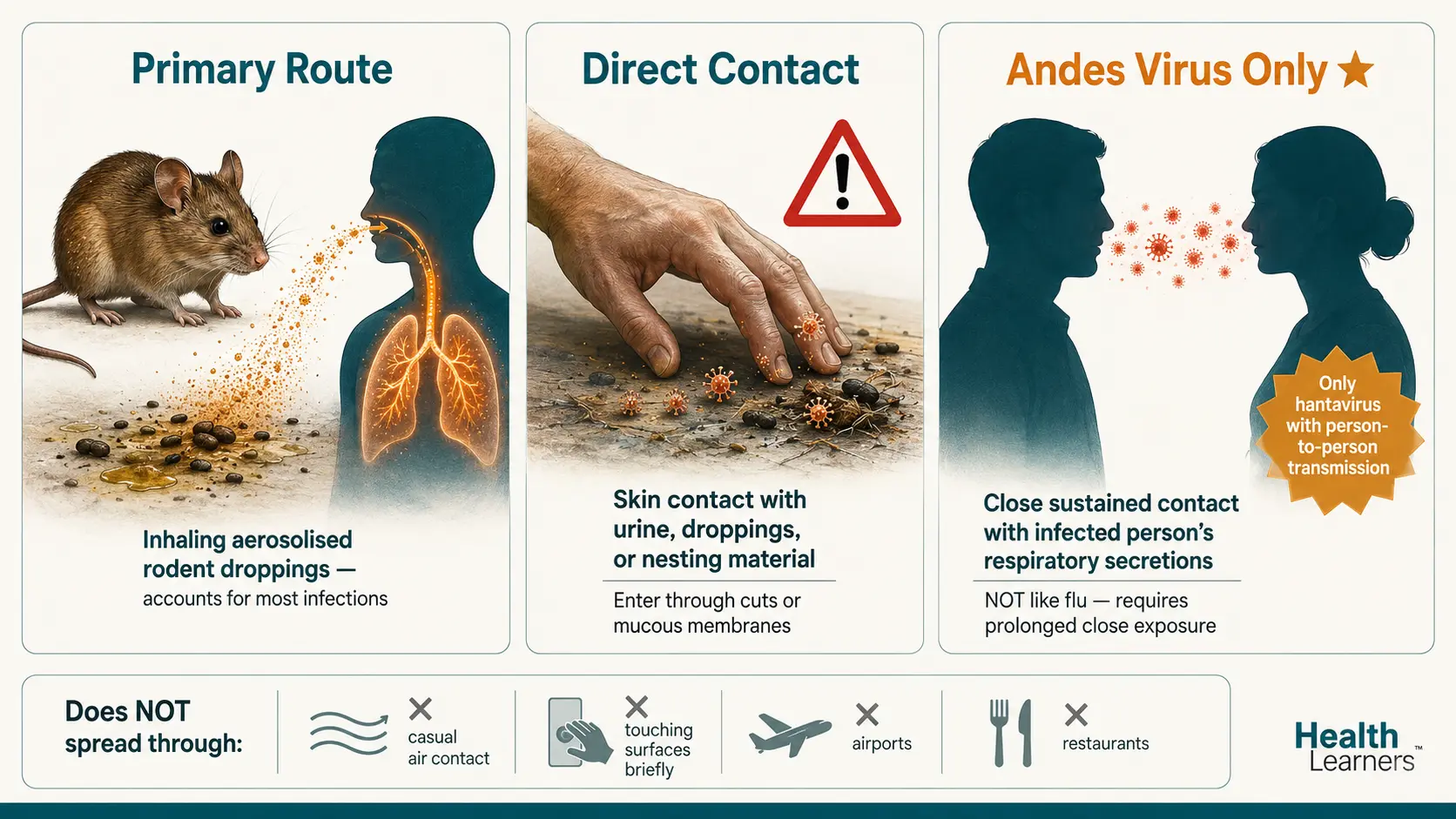
For almost all hantavirus species, transmission is a one-way street from infected rodent to human. Inhalation is the primary route — when fresh rodent urine, droppings, or nesting material is disturbed, viral particles become aerosolised (turned into breathable particles) and enter the lungs. It can also penetrate through broken skin or mucous membranes if contaminated material touches the eyes, nose, or mouth. Rodent bites are possible but uncommon. CDC Prevention · 2026
Crucially, the virus does not survive long outside a host. Dr. Safder Ganaie, an assistant professor of molecular genetics and microbiology at the University of Florida College of Medicine and a member of the UF Emerging Pathogens Institute, put it plainly: “You have to inhale virus-carrying particles released when rodent-contaminated materials are disturbed, and even then, the virus only survives on surfaces for a few days. It’s not nearly as airborne as influenza or other common respiratory viruses.” UF Health · May 2026
That line — not nearly as airborne — is the most important sentence for understanding the current outbreak. It explains why WHO’s global risk remains low despite cases appearing across six countries. Hantavirus has not demonstrated the transmission efficiency needed to sustain a pandemic chain. Serious. Not omnipresent.
The Andes Virus Exception: When Person-to-Person Transmission Occurs
Andes virus is the single confirmed exception to the no-human-to-human rule that governs the rest of the hantavirus family. Person-to-person spread has been scientifically documented — but it requires close, typically prolonged contact. Household members sharing a bed. Intimate partners. People confined in an enclosed space over an extended period. Spread involves direct exposure to the infected person’s respiratory secretions, saliva, or body fluids. CDC Andes Virus Fact Sheet · 2026
On the MV Hondius, the index case is believed to have contracted the virus during a four-month road trip through Chile, Uruguay, and Argentina before boarding the ship on 1 April 2026. Subsequent cases among fellow passengers suggest onward Andes virus transmission occurred aboard the vessel — exactly the enclosed, sustained-contact environment where this strain’s unique properties matter most. Argentine Ministry of Health · WHO DON600 · May 2026
“Hantavirus spreads like the flu — being near an infected person is enough.”
Not accurate. For almost all hantavirus strains, there is zero human-to-human transmission whatsoever. For Andes virus specifically, person-to-person spread requires sustained close contact — not a brief corridor encounter or a shared flight. WHO has confirmed no evidence of broader community spread from the 2026 MV Hondius outbreak. Returned passengers without symptoms and without close contact with confirmed cases carry minimal risk. WHO · Today.com · May 2026
Recognising HPS: The Four Stages of Illness and the Critical Warning Sign
Hantavirus Pulmonary Syndrome has a cruel architecture. Its opening phase is indistinguishable from dozens of ordinary viral illnesses. Then a single new symptom arrives — and within hours everything can change. Knowing that warning sign, and acting on it immediately, is the single most useful thing anyone can take from reading this.
No symptoms at all. While the virus replicates silently, a person looks and feels completely well — there is no way to know exposure has occurred. For Andes virus, this invisible window spans 4 to 42 days, meaning someone exposed in early April may not develop symptoms until mid-May. That wide window is why telling your doctor about any rural South American travel is so critical when you present with flu-like illness. CDC · 2026
Summary — Four Clinical Stages of HPS
- Stage 1 — Incubation (4–42 days): No symptoms. Virus replicates silently. Travel history to rodent-endemic areas must be disclosed to any treating physician — this is the diagnostic trigger.
- Stage 2 — Prodrome (3–5 days): Fever, deep muscle aches (thighs, hips, back), headache, fatigue, nausea, vomiting, diarrhoea. Clinically identical to influenza. This is the window to seek care and disclose potential exposure — the earlier, the better the odds.
- Stage 3 — Cardiopulmonary (hours to days): Sudden dry cough and breathlessness mark the critical turn. Lungs fill with fluid within 4–24 hours. Oxygen collapse and circulatory shock follow rapidly. Half of patients without ICU intervention die within 24–48 hours. Case fatality: 30–50%. ECMO initiated at first sign of decompensation achieves 80% survival. (CDC, ScienceDirect, 2024–2026)
- Stage 4 — Convalescence (weeks to months): Survivors recover rapidly once the acute phase resolves. Most achieve full pulmonary recovery with no long-term sequelae.
Hold onto this single clinical fact: the cardiopulmonary phase arrives fast, and without meaningful warning. Most patients develop hypotension within 24 hours of their first clinical evaluation. According to the CDC’s clinician brief, initiating ECMO (extracorporeal membrane oxygenation — a cardiac and lung bypass device) at the earliest sign of deterioration achieves an 80% survival rate even when the patient is already in collapse. CDC Clinician Brief · HPS · 2024
That 80% is not a footnote. It is the entire clinical argument for presenting to hospital early, speaking your travel history clearly, and never treating a deteriorating respiratory illness as something to sleep off — not after a recent trip to rural South America, not after contact with a confirmed case.
“HPS is rarely recognised until after the onset of the cardiopulmonary phase — at a point when progression to respiratory failure, shock and death may occur within hours.”
PMC / NIH — Treatment of Hantavirus Pulmonary Syndrome (peer-reviewed review)
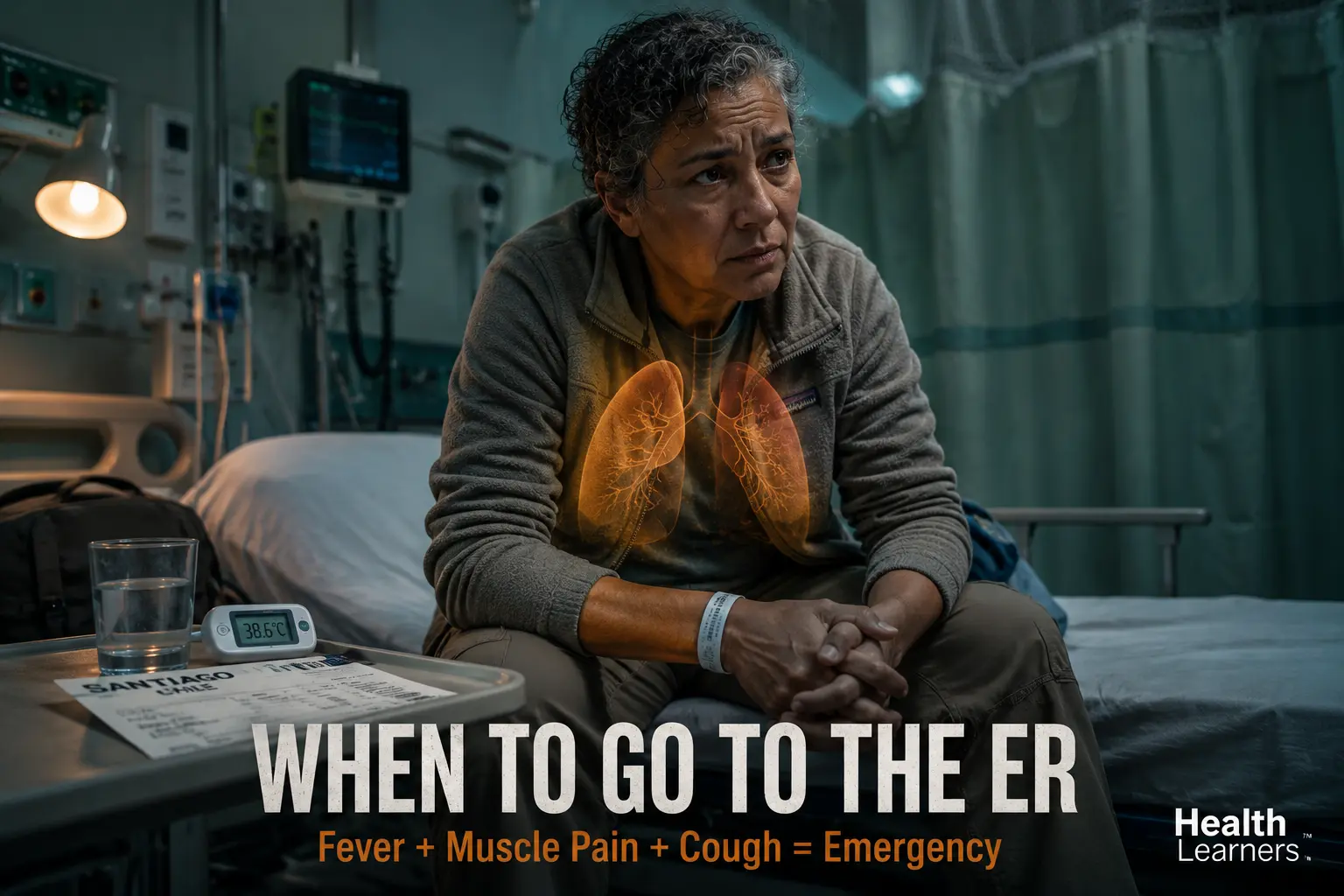
If you have been told you may have been exposed — because you were aboard the MV Hondius, because you travelled through South America recently, or because you have had close contact with a confirmed case — and you then develop fever with muscle aches followed by any cough or breathlessness: that combination is a medical emergency. Not a call to your GP in the morning. An emergency department visit today, where you lead with those two words: hantavirus exposure.
Treatment: What Doctors Can — and Cannot — Do
No licensed antiviral drug treats Hantavirus Pulmonary Syndrome. Intravenous ribavirin, which is effective for Hemorrhagic Fever with Renal Syndrome, has not been shown to work for HPS. As of May 2026, no approved vaccine exists for any hantavirus strain. Merck Manual Professional · 2024 | WHO · 2026
What saves lives is intensive supportive care. Mechanical ventilation manages respiratory failure. Meticulous fluid balance prevents pulmonary oedema from worsening. Vasopressors manage circulatory shock. And ECMO — a device that bypasses both heart and lungs to oxygenate blood externally — has transformed survival odds for patients who reach it early enough.
Remarkably, the prognosis for survivors is good. Patients who survive the first critical days typically improve rapidly over two to three weeks, usually recovering completely without long-term lung damage. Hantavirus concentrates its brutality in that early window. After it passes, most people get their lives back. Merck Manual · 2024
Diagnosis is confirmed through blood antibody tests — specifically ELISA (enzyme-linked immunosorbent assay, which detects IgM antibodies indicating active infection) — or RT-PCR genetic testing. One critical note: testing within the first 72 hours of symptoms may return negative because antibody levels are not yet detectable. If clinical suspicion is high but the first test comes back negative, repeat testing at the 72-hour mark is standard protocol. CDC About Hantavirus · University of Arizona Extension · 2026
How to Protect Yourself — Prevention That Actually Works
No vaccine. No post-exposure prophylaxis. What exists — and it is genuinely effective — is a set of specific, practical behaviours that break the transmission chain at every point where it can be broken.
If reading about hantavirus is making you anxious, hold onto this: in the United States, only 890 cases have been documented since national tracking began in 1993. Thirty-three years. Risk for people who are not working in rodent-infested environments or travelling to endemic rural areas is extremely low. What follows is not a protocol for daily anxiety — it is targeted guidance for the situations where risk is real. Stony Brook Medicine · 2026
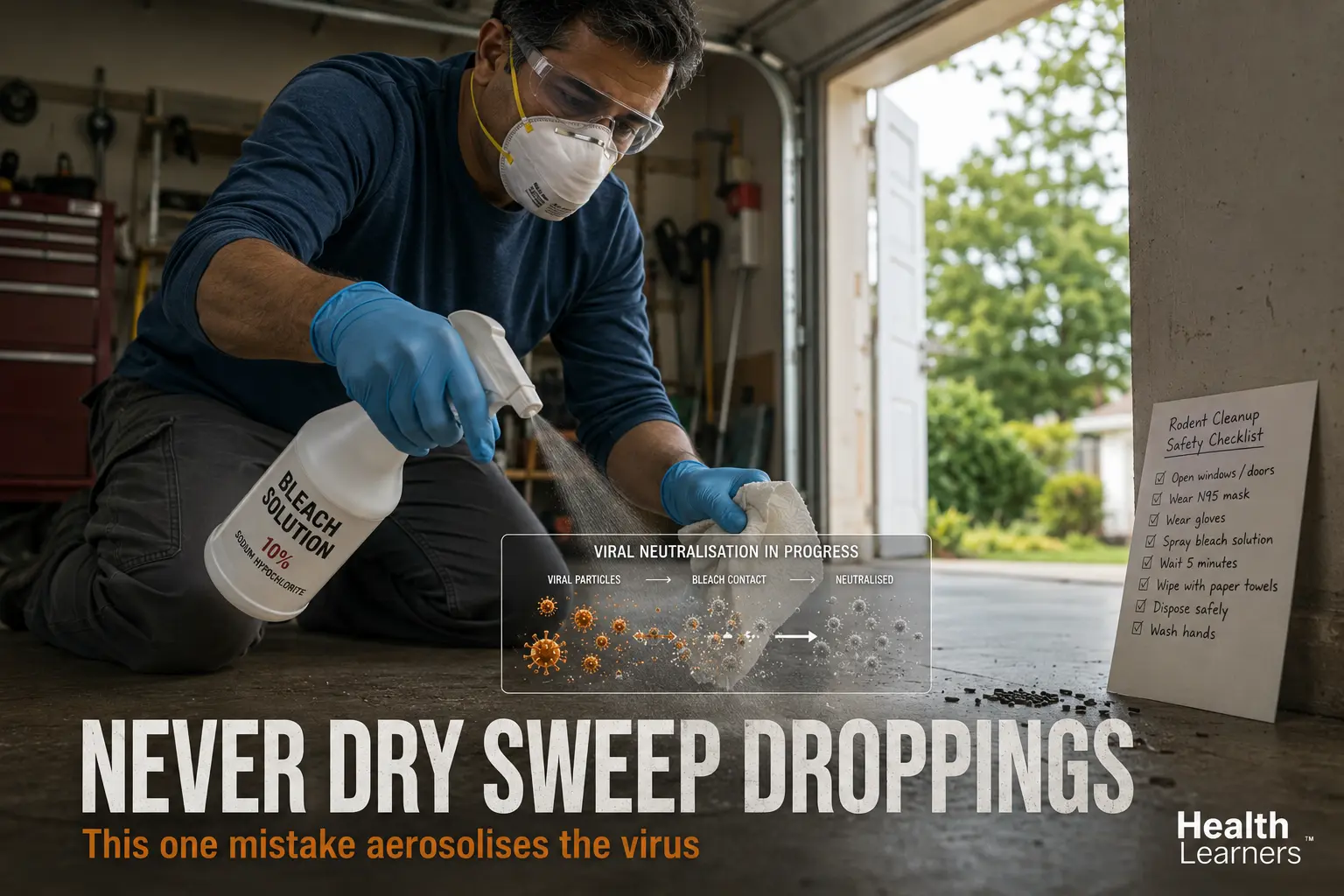
- Ventilate the space for at least 30 minutes before entering — open all windows and doors, then leave the area
- Wear rubber or latex gloves and a properly fitted N95 respirator
- Spray droppings, nesting material, and dead rodents with bleach solution (1 part bleach : 9 parts water) — let soak for 5 full minutes
- Wipe up with paper towels; seal in double plastic bags before disposal
- Mop hard floors with disinfectant — never dry sweep
- Steam clean or shampoo upholstered furniture and carpets
- Wash hands and forearms thoroughly after removing gloves
- Never dry-sweep or vacuum rodent droppings — this aerosolises the virus directly into your breathing air
- Never handle dead rodents without gloves and a mask
- Never disturb nesting material without protective equipment
- Never enter a long-closed, potentially infested building without ventilating it first
- Never ignore fever and muscle aches after known rodent exposure — the intervention window is short
- Never wait to “see how it develops” if respiratory symptoms appear after potential hantavirus exposure
Rodent-Proofing Your Home
Reducing rodent presence is the primary prevention strategy, and it starts smaller than most people expect. Mice can squeeze through gaps as small as 6mm — roughly the width of a pencil. Rats need about the diameter of a 50-cent coin. Seal every gap and crack in your exterior walls, around pipes, under doors, and in the roof. Store food — including pet food — in sealed hard containers. Keep rubbish in lidded bins, remove brush piles and wood stacks from directly beside the house, and clear clutter from storage areas where rodents nest undisturbed. CDC Prevention · HantaVirus Prevention Guide · 2026
Travel Safety in Hantavirus-Endemic Regions
Travelling in rural South America — particularly Argentina, Chile, southern Brazil, or Uruguay — means hantavirus risk is real and worth preparing for. Avoid camping near areas with visible rodent activity (burrows, gnawed materials, droppings on the ground). Sleep on a raised cot rather than the ground itself. Before entering rural cabins or outbuildings that have been closed for any length of time, ventilate thoroughly and do not disturb accumulated dust and debris without protective equipment. Any flu-like illness within six weeks of returning home should be reported to your doctor with your travel history mentioned upfront. CDC · WHO · HantaVirus Prevention · 2026
If you cannot remember any of this in an emergency, remember just one thing: fever plus muscle aches plus shortness of breath, after recent South American rural travel, is a medical emergency. Walk into the emergency department. Say the word hantavirus. Everything else flows from that.
The 2026 Cruise Outbreak: What It Reveals About Hantavirus Risk
Understanding why the MV Hondius outbreak is unusual matters as much as understanding what happened — because the “why” is what keeps the global risk picture accurate.
A Dutch passenger who had spent four months travelling rural South America is believed to be the index case — exposed to Andes-virus-carrying rodents somewhere along that route before boarding the ship on 1 April 2026. What made the cruise context dangerous was not some new virulence in the pathogen. It was a specific combination: a person infected with Andes virus (the one strain capable of person-to-person spread), an enclosed environment, and close sustained contact with other passengers over an extended voyage. Wikipedia / Argentine Ministry of Health · May 2026
Remove any one of those three factors and this outbreak very likely does not happen. A different hantavirus strain — no person-to-person spread at all. An open environment — no sustained proximity. A shorter voyage — less opportunity for transmission to occur. Andes virus simply behaves differently from every other hantavirus, and that difference matters most in exactly the kind of enclosed, prolonged-contact setting that a ship creates.
WHO has since classified hantaviruses as emerging priority pathogens with high potential to spark international public health emergencies — not because individual outbreaks are likely to become pandemics, but because their severity, the complete absence of antiviral treatment, and the unique properties of the Andes strain make this a category of virus warranting serious and sustained scientific attention. CNN · 2026 | WHO Priority Pathogen List
- Hantavirus is a family of 50+ rodent-borne viruses. Andes virus — responsible for the MV Hondius outbreak — is the only type confirmed to spread between people, and only through close, sustained contact
- As of 9 May 2026, the MV Hondius outbreak has produced 8 cases and 3 deaths — beginning in a South American traveller and spreading aboard a cruise ship via person-to-person Andes virus transmission
- HPS follows four stages: incubation (4–42 days, no symptoms), prodrome — the early flu-like phase lasting 3–5 days, cardiopulmonary collapse (within hours), and recovery. Most deaths occur in that third stage
- One warning sign demands emergency care immediately: fever and muscle aches FOLLOWED by sudden dry cough or breathlessness — especially after rural South American travel or contact with a known case
- No antiviral treatment exists and no vaccine is approved. Early ICU admission and ECMO at first cardiac decompensation achieves 80% survival. Delay is the primary cause of preventable death
- Prevention centres on never dry-sweeping rodent droppings, always using N95 respirator and gloves during cleanup, sealing all rodent entry points, and ventilating closed spaces before entering
- WHO global risk assessment remains low — hantavirus cannot sustain pandemic-level transmission. This outbreak is serious for those directly involved; it is not a COVID-19 repeat
- Anyone who was aboard the MV Hondius between 1 April and 9 May 2026 should contact their national public health authority now, and monitor for symptoms for 42 days from last possible exposure
