
- Compass Pathways’ COMP360 synthetic psilocybin hit its primary endpoint in the first-ever Phase 3 trial for treatment-resistant depression (2025), with p<0.001 statistical significance
- CYB003 (deuterated psilocybin) achieved a 75% remission rate in Phase 2 — among the highest ever recorded for any depression treatment
- President Trump signed an EO on April 18, 2026 directing FDA to fast-track psychedelic therapies; FDA announced priority review April 24, 2026
- Psilocybin works through a fundamentally different mechanism than SSRIs — it disrupts the Default Mode Network, promoting neuroplasticity rather than managing neurotransmitter levels daily
- Effects from one or two sessions can last from weeks to over a year — versus daily medication with ongoing side effects
- It is not appropriate for everyone — people with personal or family history of psychosis face serious contraindications
- What Is Psilocybin — and Why Is Everyone Talking About It Now?
- The Clinical Trial Landscape: What the Data Actually Says
- How Psilocybin Rewires the Brain — The Neuroscience Explained
- What a Psilocybin Therapy Session Actually Looks Like
- Who Should — and Who Should NOT — Consider This Treatment
- The Legal and Regulatory Landscape in 2026
- Beyond Depression: Other Conditions Being Investigated
- Frequently Asked Questions
Psilocybin therapy for depression has gone, in the span of about eight years, from a fringe scientific hypothesis to the center of the most consequential debate in psychiatry in a generation. The compound at the heart of this conversation is the active ingredient in what were once called “magic mushrooms” — a molecule that, when properly administered in a therapeutic setting, appears to do something that every major class of psychiatric medication has failed to do with any consistency: produce deep, lasting relief from severe depression in people who have tried everything else and gotten nowhere.
I’ve been a practicing psychiatrist for fourteen years. I’ve watched patients cycle through antidepressant after antidepressant — adjusting doses, switching classes, adding augmentation agents, trying electroconvulsive therapy, trying transcranial magnetic stimulation — and still wake up every morning in the same dark room they have been living in for a decade. The number of those patients is not small. Roughly one in three people with major depressive disorder develops what we call treatment-resistant depression (TRD), meaning they fail to respond to at least two adequate trials of antidepressant medication. That is approximately seven million people in the United States alone. For them, psilocybin therapy is not a novelty or a lifestyle choice. It is, potentially, a lifeline.
And the evidence that it works is no longer preliminary. In 2025, Compass Pathways announced that its Phase 3 trial of synthetic psilocybin (COMP360) had successfully hit its primary endpoint — the first Phase 3 trial of any psychedelic to do so for a psychiatric indication in the history of modern medicine. A Phase 2 trial of a related compound, CYB003, produced a 75% remission rate. And on April 18, 2026, President Trump signed an executive order directing the FDA to fast-track psychedelic therapies, followed six days later by an FDA announcement of a priority review program that moves these drugs from a ten-month review timeline to one to two months.
This article is my attempt to give you a complete, honest, scientifically grounded account of where psilocybin therapy actually stands in 2026 — not the hype version, and not the reflexive skepticism of people who have not read the trials. The data is real. The questions it raises are equally real. Both deserve your full attention.
What Is Psilocybin — and Why Is Everyone Talking About It Now?
Psilocybin is a naturally occurring compound found in over 200 species of fungi, most famously the Psilocybe cubensis mushroom. Humans have been consuming it in ceremonial and spiritual contexts for at least 3,000 years, with documented use by indigenous cultures across Mesoamerica. In the 1950s and 1960s, it attracted serious scientific interest as a potential psychiatric medicine — interest that was abruptly extinguished in the early 1970s when the Nixon administration’s War on Drugs classified psilocybin as a Schedule I controlled substance, halting most research for nearly three decades.
The modern renaissance began quietly at Johns Hopkins and NYU in the early 2000s, when researchers obtained special permissions to study psilocybin in healthy volunteers and terminal cancer patients experiencing existential distress. What they found was remarkable: single or double sessions produced sustained reductions in anxiety, depression, and death-related fear that persisted for months and even years, with a safety profile far superior to the compounds’ Schedule I classification implied. The quality of those early trials was high enough to attract serious institutional attention — and by 2018, psilocybin had received its first FDA Breakthrough Therapy Designation for treatment-resistant depression.
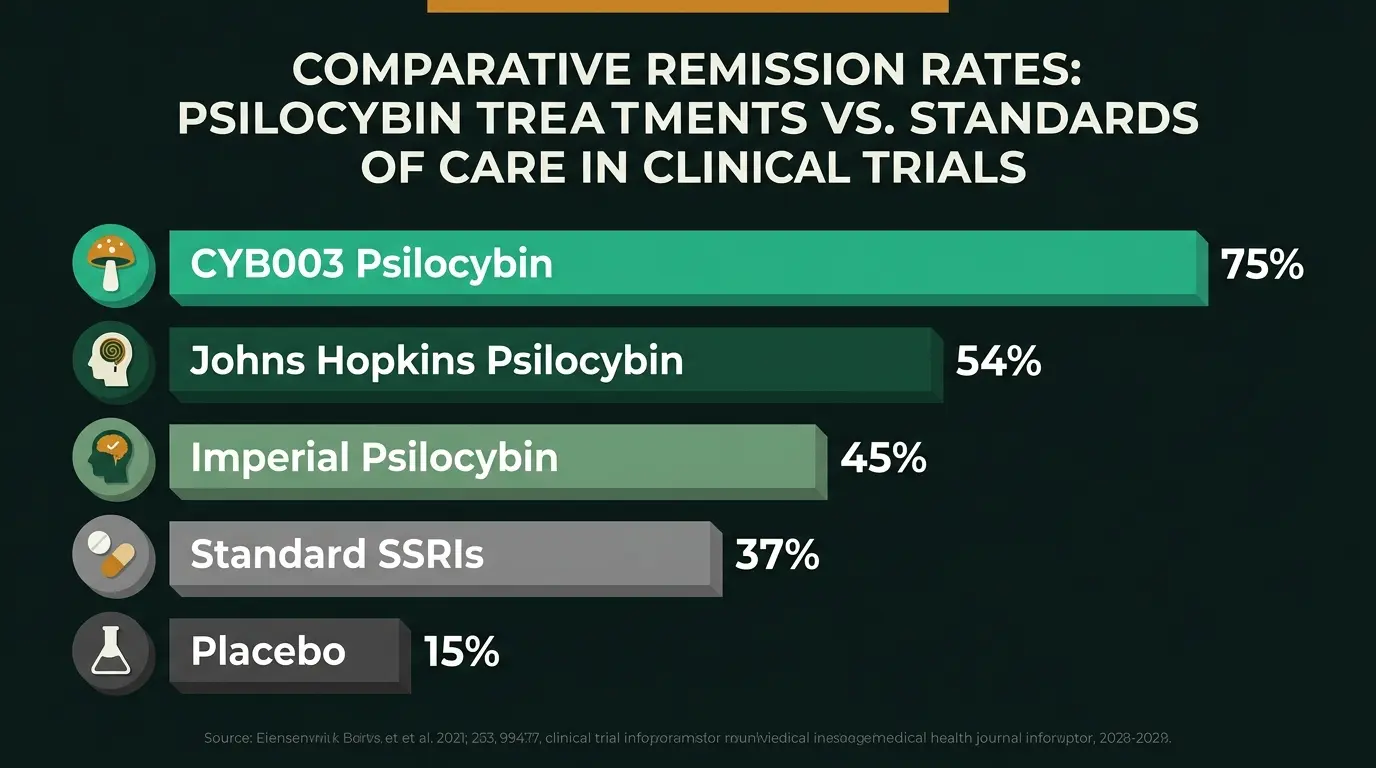
The compound works as a prodrug. When ingested, the body rapidly converts psilocybin into its active metabolite, psilocin, through a process called dephosphorylation. Psilocin then acts primarily as a partial agonist at serotonin 5-HT2A receptors throughout the brain — the same receptor family involved in the mechanism of most classical psychedelics. Critically, it is not a serotonin booster in the way that SSRIs are. It does not increase serotonin availability at the synapse. Instead, it mimics serotonin at a specific receptor subtype in a way that cascades into a profound, temporary restructuring of how the brain organizes itself — with effects that, paradoxically, last long after the molecule has completely left the body.
Why is everyone talking about it now, specifically? Because the data has crossed the threshold from promising to compelling. The Phase 3 trial success of COMP360 is the single most important milestone in the field’s history. Phase 3 trials are the gold standard of clinical evidence — they are the trials that result in FDA approval. Hitting a primary endpoint in Phase 3, with p<0.001, means that the probability the result was due to chance alone is less than 1 in 1,000. That is not an accident. That is a medicine.

The Clinical Trial Landscape: What the Data Actually Says
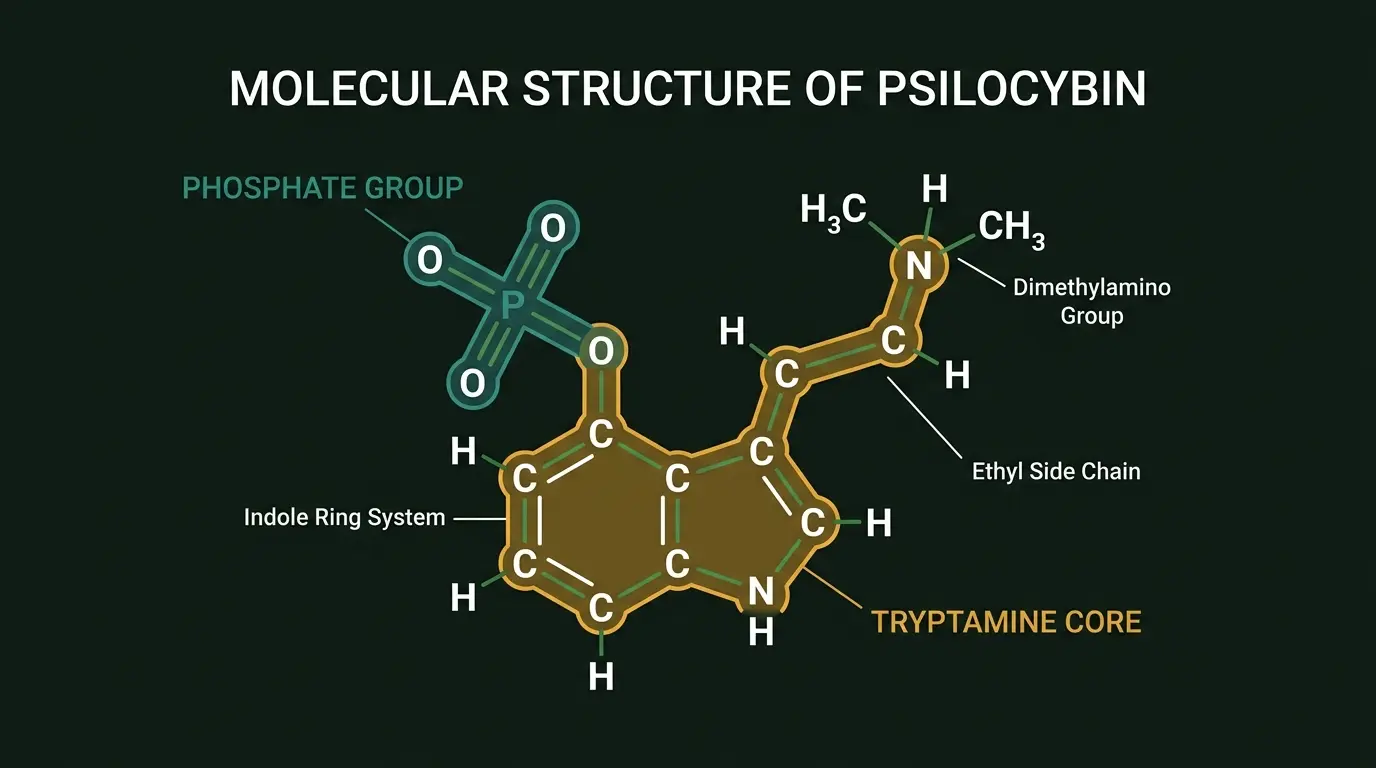
The psychedelic therapy literature has matured significantly over the past five years. We have moved from small, open-label pilot studies to randomized, placebo-controlled Phase 2 trials, and now to the first successful Phase 3 trial. The picture that emerges from this progression is consistent: psilocybin works for depression, it works substantially better than placebo, and in many cases it works better or faster than the standard of care. Let me walk you through the key studies you need to understand.
Key Psilocybin Clinical Trials — Summary Table
Compiled from published trial data and press releases, 2021–2026| Trial / Drug | Phase | Indication | Key Result | Status |
|---|---|---|---|---|
| COMP360 (Compass Pathways) |
Phase 3 COMP005 |
Treatment-Resistant Depression | Primary endpoint met; -3.6 MADRS score vs placebo at week 6; p<0.001 | ✓ Success |
| COMP360 (Compass Pathways) |
Phase 3 COMP006 |
Treatment-Resistant Depression | 26-week data expected H2 2026; enrollment ongoing | Enrolling |
| CYB003 (Cybin Inc.) |
Phase 2 | Major Depressive Disorder | 75% remission at 4 months; 2 doses of 16mg; FDA Breakthrough designation | ✓ Success |
| Psilocybin vs. Escitalopram (Imperial College London) |
Phase 2 RCT |
Major Depressive Disorder | Psilocybin comparable or superior to daily escitalopram at 6 weeks; greater emotional well-being improvement | ✓ Published |
| Johns Hopkins (Standard psilocybin) |
Phase 2 | Major Depressive Disorder | 54% remission at 4 weeks; effects maintained at 12 months in follow-up cohort | ✓ Published |
| Swiss University Hospital (Psilocybin 25mg) |
Real-world PAP data |
TRD + Anxiety (115 patients) |
Significant reduction in depression (BDI) and trait anxiety (STAI-T) at 1–3 months post-treatment; partial η²=0.42 | Published 2025 |
The Imperial College London head-to-head comparison against escitalopram (Lexapro) deserves particular attention because it answers the question that every patient and clinician actually wants answered: how does psilocybin compare to the drugs we already use? The trial, led by Professor Robin Carhart-Harris, randomly assigned patients with moderate-to-severe depression to either two psilocybin sessions (with psychological support) or a six-week course of daily escitalopram. Both groups showed improvement, but the psilocybin group showed significantly greater improvements in emotional well-being and positive affect — the ability to actually feel good, not just feel less bad — a distinction that matters enormously to people living with depression.
The Swiss real-world data is also significant because it represents what happens when psilocybin is used in actual clinical practice rather than highly controlled research settings — a messier, more realistic population including people with multiple comorbidities. The results held. A partial eta-squared of 0.42 for depression reduction is a large effect size by any standard in psychiatric research. For context, most antidepressant medications produce effect sizes in the range of 0.20 to 0.30 in meta-analyses.
How Psilocybin Rewires the Brain: The Neuroscience Explained
One of the most common objections I hear from physicians who are skeptical of psilocybin therapy is this: “We don’t know how it works.” I understand the concern — mechanism is important for clinical confidence. But I want to be direct: we know quite a lot about how psilocybin works, and what we know is scientifically coherent and clinically meaningful. It is not a mystery. It is, in fact, one of the best-mechanistically-understood rapid antidepressant agents in existence. Let me explain.
When psilocybin is metabolized to psilocin, the resulting compound acts as a partial agonist at serotonin 5-HT2A receptors — the most abundant serotonin receptor in the cerebral cortex, particularly dense in the medial prefrontal cortex (mPFC). This receptor activation triggers a cascade: increased glutamate release in the mPFC, stimulation of AMPA and NMDA receptors, and a downstream surge in brain-derived neurotrophic factor (BDNF) — the protein most associated with neurogenesis, synaptic strengthening, and the brain’s capacity to form new connections. Psilocybin is, in neurobiological terms, a powerful neuroplastogen.
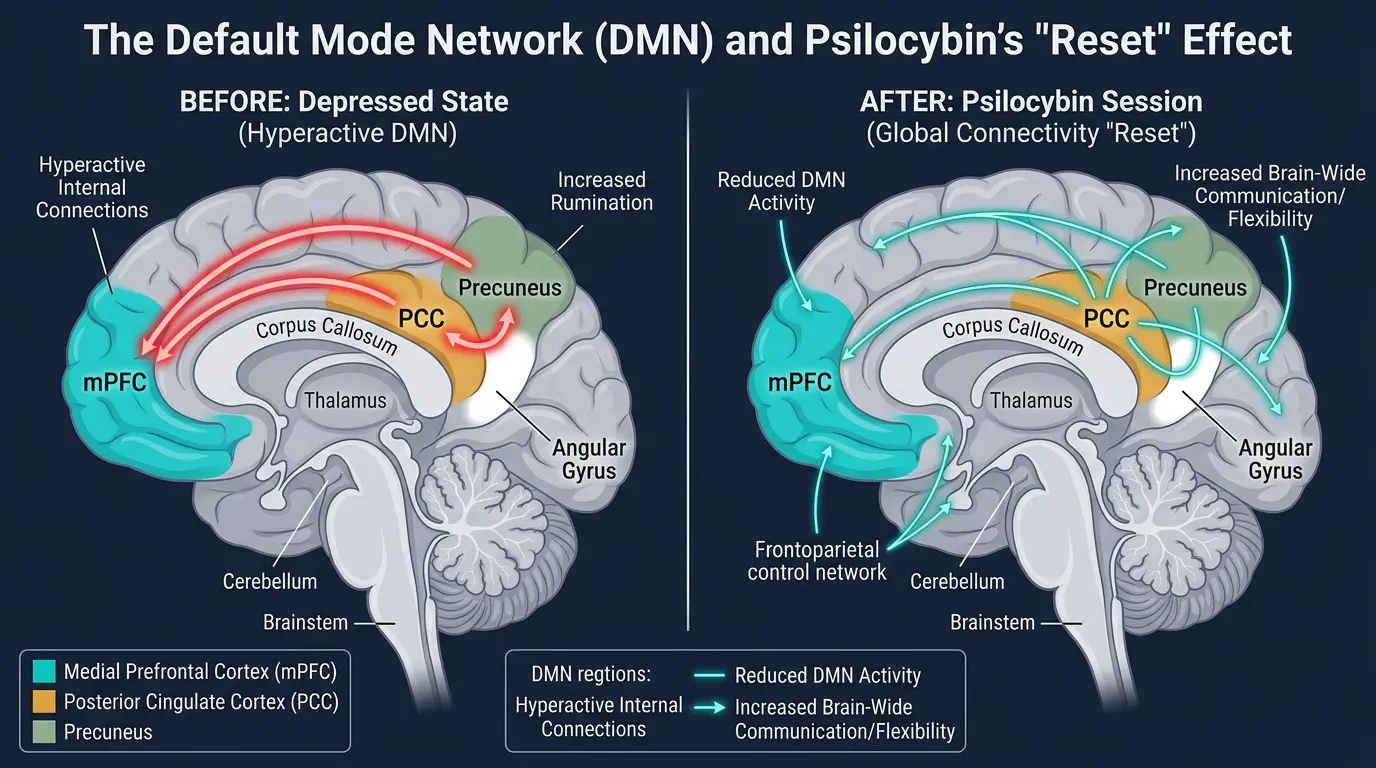
But the most clinically important story is at the network level. Using fMRI imaging, researchers can observe how psilocybin alters the brain’s functional organization — which regions communicate with which other regions, and how strongly. And across every major study, one finding is strikingly consistent: psilocybin dramatically disrupts the Default Mode Network (DMN).
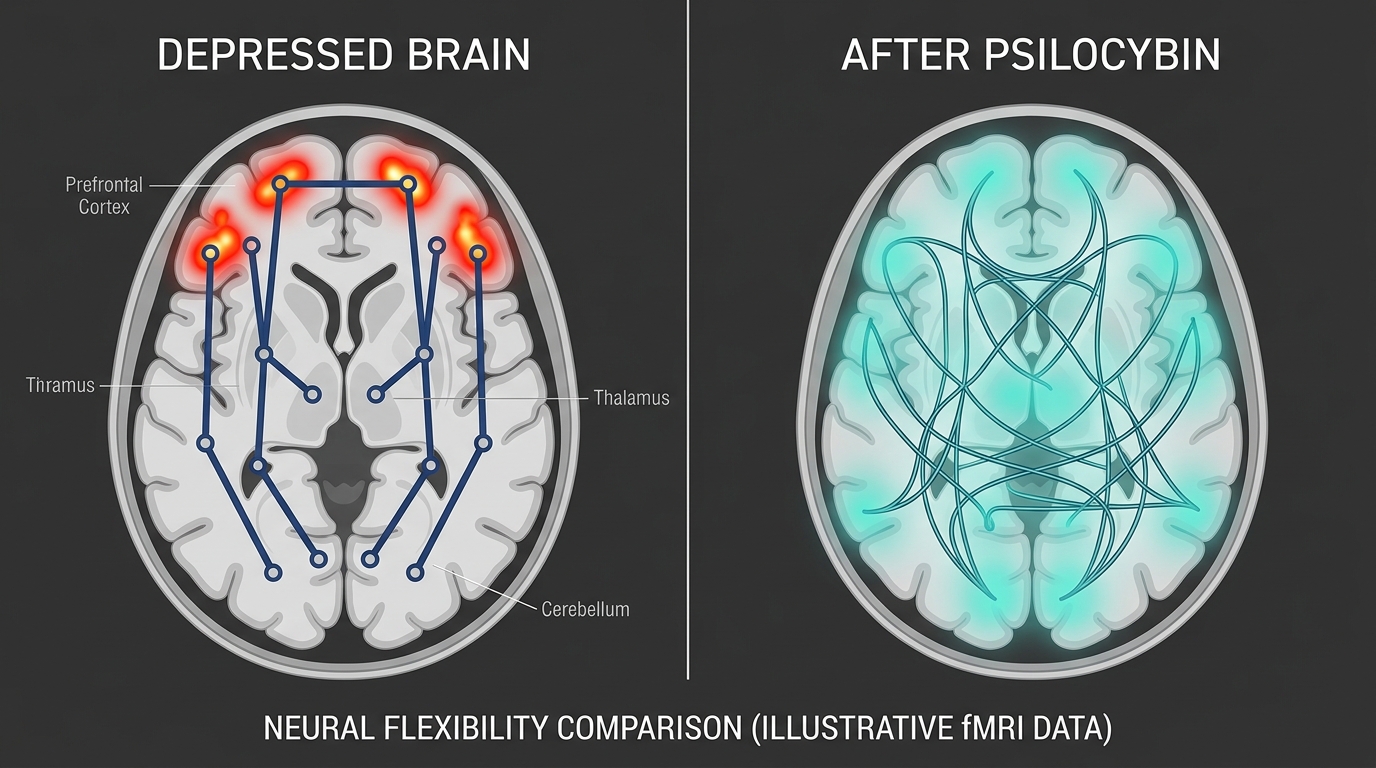
The Default Mode Network: The Architecture of Self-Torment — and How Psilocybin Dismantles It
The Default Mode Network is a set of interconnected brain regions — centered on the medial prefrontal cortex, posterior cingulate cortex, and precuneus — that becomes active when we are not focused on an external task. It is the neural substrate of the inner monologue: our sense of self, our autobiographical memory, our tendency to ruminate about the past or worry about the future. In healthy brains, the DMN activates during rest and deactivates during goal-directed activity. In depressed brains, it is chronically hyperactive — running in the background like a program that won’t close, generating loops of self-criticism, hopelessness, and worthlessness. Psilocybin temporarily and powerfully suppresses DMN connectivity. The medial prefrontal cortex and posterior cingulate cortex become desynchronized. The rigid, self-reinforcing loops of negative thought lose their structural grip. Simultaneously, brain regions that normally do not communicate begin forming new connections across previously segregated networks — a state of dramatically increased neural entropy and flexibility. Neuroimaging researchers call this a “reset.” Patients call it coming out of prison.
A systematic review published in the International Journal of Neuropsychopharmacology, analyzing 28 studies of psilocybin, LSD, and ayahuasca, found consistent DMN disruption across all three compounds and across all study populations. The degree of DMN disruption showed moderate-to-strong correlations (r = 0.57–0.60) with subjective ego dissolution experiences — the sense of the self dissolving and merging with something larger — which in turn predicted therapeutic outcomes. One study found that decreased brain network modularity (a measure of how rigidly segregated brain networks are) predicted improved clinical outcomes at six months post-treatment. The brain’s shift from a rigid, siloed architecture to a more flexible, interconnected one is not merely a psychedelic curiosity. It appears to be the mechanism of therapeutic action.
Psilocin binds as a partial agonist at serotonin 5-HT2A receptors — most densely expressed in the medial prefrontal cortex. This is the primary trigger of both the subjective experience and the downstream neuroplastic cascade.
5-HT2A activation triggers glutamate release in the mPFC, stimulating AMPA and NMDA receptors and inducing a surge in BDNF — the key neuroplasticity protein. This promotes synaptogenesis: the growth of new synaptic connections.
Psilocybin consistently and powerfully suppresses DMN activity and inter-regional connectivity, dismantling the rigid negative-thought architecture of depression and creating a temporary state of increased neural flexibility.
While the DMN is suppressed, previously siloed brain networks begin communicating. fMRI scans show unprecedented cross-linking of regions that don’t normally interact — the neurological substrate of novel perspectives and insights.
Post-session, patients consistently report increased emotional flexibility, reduced emotional avoidance, and enhanced capacity for self-compassion — behavioral correlates of the neuroplastic changes that are detectable on neuroimaging days after the session.
Emerging 2025 research (University of Padua) shows psilocin interacts with intracellular 5-HT2A receptors inside neurons — potentially explaining the sustained neuroplastic effects that persist long after the molecule clears the brain.
What a Psilocybin Therapy Session Actually Looks Like
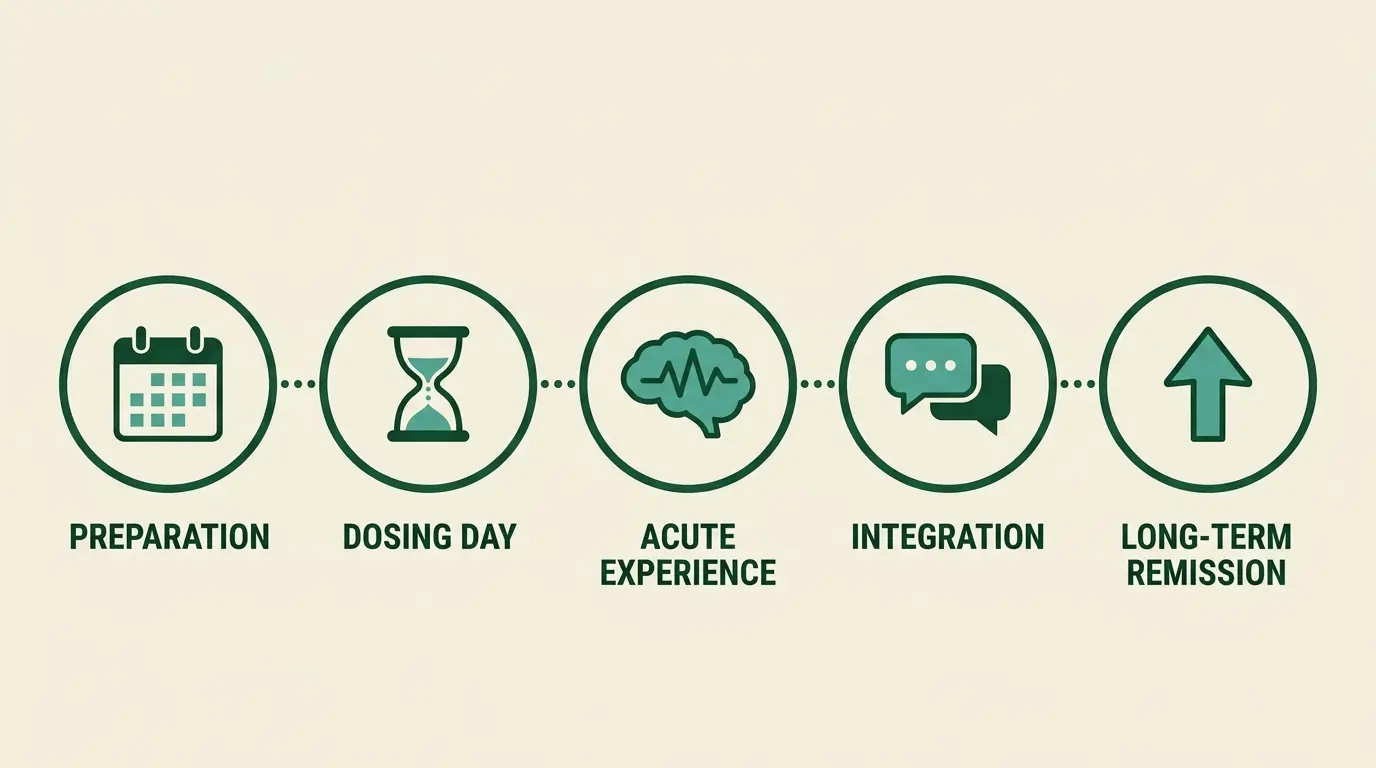
This is the question patients ask me most often, and it is the part of psilocybin therapy that is most misunderstood by people whose only reference point is recreational use. Clinical psilocybin therapy is not about taking mushrooms and “tripping.” It is a medically structured, therapeutically framed experience conducted under careful clinical protocols. The drug’s effects are the same either way — the neuroscience does not change based on context — but the therapeutic structure determines how those effects translate into lasting benefit. Here is what it actually involves.
Two to three preparatory sessions with two trained therapists establish therapeutic rapport, trust, and intention-setting. The patient learns what to expect, processes any fears or resistance, and articulates what they hope to gain. This foundation is not optional — it is predictive of session quality and therapeutic outcome. Patients who feel safe and prepared have better experiences and better results.
The patient arrives at a clinic-like room designed to be comfortable and calming. They take their dose — typically 25mg of synthetic psilocybin in trials — then recline on a couch, put on an eye mask, and listen to a specially curated music playlist. Two therapists are present throughout, sitting quietly, available if needed but not directing the experience. Patients are encouraged to “surrender to the experience” — to allow whatever arises emotionally to surface rather than resist it. The session typically involves periods of profound introspection, emotional release, visual experiences, and a sense of expanded perspective. After five to six hours, the acute effects subside.
Integration is where the therapeutic work happens. The acute experience creates a window of increased neuroplasticity and psychological openness — but that window does not translate automatically into lasting change. Integration sessions help the patient process what surfaced, apply the insights to their life, and consolidate new patterns of thinking and behavior before the neural flexibility window closes. Research shows integration is the strongest predictor of long-term therapeutic outcomes, even controlling for the quality of the acute experience itself.
Most current protocols involve one or two dosing sessions. CYB003’s 75% remission data came from two sessions at 16mg each. Some patients achieve and maintain remission after a single session; others benefit from a second. Whether periodic booster sessions are needed — and at what interval — is an active area of investigation in ongoing trials.
Who Should — and Who Should NOT — Consider This Treatment
One of my most important responsibilities as a psychiatrist writing about psilocybin is to be unflinchingly clear about who this treatment is and is not appropriate for. The enthusiasm in this field is justified by the data — but enthusiasm without appropriate clinical judgment is dangerous. Psilocybin is a powerful psychoactive agent. Its risk profile is manageable and low in appropriate populations, and potentially serious in the wrong ones. Here is what the evidence says.
- Treatment-resistant depression (failed ≥2 antidepressants)
- Major depressive disorder seeking alternatives to lifetime SSRIs
- Depression with high anxiety and emotional avoidance
- End-of-life existential distress in terminal illness
- Depression with alcohol use disorder (emerging evidence)
- People motivated to engage in integration psychotherapy
- Patients screened and cleared by a qualified psychiatrist
- Personal OR family history of psychosis or schizophrenia
- Bipolar I disorder (can trigger manic episodes)
- Current use of lithium or tramadol (dangerous interactions)
- Active uncontrolled cardiovascular disease
- Pregnancy or breastfeeding
- Unwillingness to engage in preparatory or integration therapy
- Current severe suicidal ideation without safety plan
⚠ A Critical Clinical Warning
Psilocybin is not appropriate as a self-administered treatment, and “microdosing” — taking sub-perceptual doses regularly outside a clinical structure — is not the same as therapeutic psilocybin and has no comparable clinical trial support for depression. Anyone seeking psilocybin therapy should do so through a licensed clinical trial, an approved state program (Oregon, Colorado), or a medically supervised program abroad. The growing number of unlicensed “retreat” operators presents genuine safety risks, particularly for people with unscreened psychiatric vulnerabilities.
The Legal and Regulatory Landscape in 2026

The regulatory situation around psilocybin is changing faster than almost any other area of drug policy, and the picture in April 2026 is substantially different from what it was just eighteen months ago. Let me give you an accurate snapshot.
Psilocybin remains a Schedule I controlled substance federally in the United States, classified alongside heroin and LSD as having “no currently accepted medical use and a high potential for abuse.” That classification is increasingly at odds with the evidence, and multiple forces are moving to change it. On August 25, 2025, the DEA forwarded a petition to formally reschedule psychedelics from Schedule I to Schedule II — the same schedule as cocaine, fentanyl, and Adderall, which are recognized as having accepted medical uses while maintaining controlled status. State-level legislative processes will follow federal action.
Then came the political acceleration. On April 18, 2026, President Trump signed an executive order titled “Accelerating Medical Treatments for Serious Mental Illness,” directing the FDA to issue priority review vouchers for psychedelic therapies with Breakthrough Therapy Designation and to streamline approval pathways. Six days later, the FDA announced a formal priority review program compressing timelines from ten months to one to two months. HHS Secretary Robert F. Kennedy Jr., who has been an outspoken advocate for psychedelic research, stated: “We are accelerating the research, approval, and responsible access to promising mental health treatments — including psychedelic therapies like ibogaine — to confront our nation’s mental health crisis head-on.”
At the state level, Oregon voters approved Measure 109 in 2020, establishing the first legal psilocybin service centers in the US, which began operating in 2023. Colorado followed in 2022 with Proposition 122, allowing licensed healing centers beginning in 2024. Both states operate under strict licensing, training, and facilitation requirements — legal frameworks that may serve as the model for federal regulation once FDA approval is achieved. Several other states, including California, Washington, and New York, have active legislative processes underway. The American Psychiatric Association has stated it “welcomes federal investment in psychedelic therapy research” but emphasizes the need for rigorous clinical trial data and physician-led oversight before approvals are issued — a position I share entirely.
Beyond Depression: Other Conditions Being Investigated
Depression is the leading edge of psilocybin’s clinical development because the evidence there is most mature. But the research portfolio extends well beyond it, and some of the most compelling early data comes from conditions where current treatments are especially inadequate.
The end-of-life distress data is, in human terms, the most moving. Patients with terminal cancer who participated in Johns Hopkins and NYU trials reported, following single psilocybin sessions, profound reductions in death anxiety, depression, and existential suffering that persisted for months and that many described as among the most meaningful experiences of their lives. The effect sizes in these studies are among the largest ever recorded for any psychological intervention for end-of-life distress. This application has received special attention in policy circles because the risk-benefit calculation is different — patients who are dying have very little to lose and potentially transformative comfort to gain.
Psilocybin for alcohol use disorder is further along than most people realize. Multiple trials have shown reductions in heavy drinking days, craving scores, and relapse rates following psilocybin therapy — with some participants reporting that their relationship to alcohol fundamentally changed after their first session in a way that no prior treatment had achieved. The mechanism is coherent: the same DMN suppression and neuroplastic flexibility that allows depressed patients to break out of negative thought patterns can disrupt the conditioned craving responses and self-narratives that maintain addiction.
Research programs are also actively investigating psilocybin for PTSD (complementary to MDMA-assisted therapy trials), obsessive-compulsive disorder (early promising signals from Yale), anorexia nervosa (where conventional treatments have among the highest mortality rates of any psychiatric condition), and cluster headaches — a devastating condition sometimes called “suicide headaches” for which current treatments are inadequate and for which psilocybin has shown anecdotal and small-trial benefits that are worth investigating properly.
Medicine at a Threshold — and What Patients Should Know Right Now
I want to end this piece the way I began it — with the patients I see every week who have exhausted the conventional pharmacopoeia and are still suffering. For them, psilocybin therapy is not an abstraction or a policy debate. It is a concrete question: can I access this? Is it right for me? Will my psychiatrist take it seriously?
Here is what the evidence allows me to say, honestly and clearly, in April 2026: psilocybin is the most promising development in the treatment of severe depression in at least thirty years. The Phase 3 trial data is real. The remission rates are extraordinary by the standards of psychiatric pharmacology. The neurobiological mechanism is well-characterized and scientifically coherent. The safety profile, in appropriate populations with proper screening, is manageable. This is not alternative medicine anymore. It is medicine that happens to be emerging from an unconventional direction.
At the same time, the work is not done. The second Compass Phase 3 trial (COMP006) has not yet reported its 26-week data. The regulatory pathway, while accelerating, has not been completed. Long-term safety data beyond one year is limited. The question of who will administer these treatments, under what training standards, in what clinical settings, and at what cost to patients — these are enormously important questions that the field has not yet answered. The American Psychiatric Association is right that enthusiasm should not outpace evidence.
What I would tell any patient who asks about psilocybin therapy today: if you are living with treatment-resistant depression, you deserve to know this treatment exists, that it has FDA Breakthrough designation, that a Phase 3 trial has succeeded, and that access through clinical trials and licensed state programs is currently available. You deserve a psychiatrist who has read the literature and can help you evaluate whether you are an appropriate candidate. And you deserve the honest acknowledgment that we are, collectively, standing at the threshold of something that may change psychiatric medicine in ways we are only beginning to understand.
The brain’s capacity to change is greater than we knew. The evidence that we can help it change — safely, meaningfully, and lastingly — has never been stronger.
Your Questions, Answered Directly
Yes — the evidence has now crossed the threshold from promising to compelling. The Phase 3 COMP005 trial (Compass Pathways, 2025) demonstrated statistically significant reductions in depression severity versus placebo at six weeks (p<0.001). A Phase 2 trial of CYB003 achieved 75% remission in participants receiving two doses — among the highest rates ever recorded in antidepressant research. Multiple Phase 2 trials at Johns Hopkins, Imperial College London, and NYU have produced consistent results. This is no longer a hypothesis. It is evidence.
The differences are fundamental, not superficial. SSRIs must be taken daily and work by maintaining higher serotonin levels at synapses — managing the chemistry of depression ongoing. Psilocybin works through a one-time (or twice) neurological reset — disrupting the Default Mode Network, promoting neuroplasticity, and enabling the formation of new neural pathways. The antidepressant effect can persist for months or over a year from a single session. It is a catalyst for change, not a chemical maintenance program. For many patients, that distinction is the most important thing about it.
A clinical psilocybin session lasts approximately six to eight hours. The patient is in a calming, clinic-like room, wearing eye shades and listening to carefully selected music, accompanied by two trained therapists who provide support without directing the experience. Before the session, there are two to three preparatory meetings. After the session, three to five integration therapy sessions help the patient process and apply what emerged. The acute experience typically involves profound introspection, emotional release, altered perception, and insights that many describe as among the most meaningful of their lives.
Psilocybin remains federally Schedule I but is undergoing rapid regulatory change. Oregon and Colorado have state-level legal psilocybin service frameworks. The DEA has forwarded a petition to reschedule psychedelics. President Trump’s April 2026 executive order directed the FDA to fast-track psychedelic therapies with Breakthrough designation — and the FDA responded days later with a priority review program. Access through licensed clinical trials is currently the most clinically appropriate and safest pathway.
The primary contraindication is any personal or family history of psychosis or schizophrenia — psilocybin can trigger psychotic episodes in vulnerable individuals and the risk is serious. Bipolar I disorder, active cardiovascular disease, pregnancy, and concurrent use of lithium or tramadol are also contraindications. Anyone without willingness to engage with preparatory and integration psychotherapy is also unlikely to derive lasting benefit, as the therapeutic structure is inseparable from the therapeutic outcome.
Clinical trials show antidepressant effects lasting from four weeks to over a year from one or two sessions. The Johns Hopkins MDD trial found effects maintained at 12-month follow-up in a significant subset of patients. The Imperial College London psilocybin versus escitalopram trial showed comparable effects at six weeks from just two sessions against daily medication. Whether periodic booster sessions are needed — and at what interval — is actively being studied in ongoing trials including the second Compass Phase 3 trial (COMP006).
The Default Mode Network (DMN) is a connected group of brain regions that activates during rest and self-reflection, generating our inner monologue, sense of self, and tendency to ruminate. In depression, the DMN becomes chronically hyperactive — running constant loops of self-criticism, hopelessness, and worry. Psilocybin powerfully and consistently disrupts DMN connectivity, dismantling those rigid loops and creating a window of neural flexibility. Across 28 neuroimaging studies reviewed in a 2022 meta-analysis, this DMN disruption was the most consistent brain-level finding associated with psychedelic therapeutic effects.
Active clinical research is investigating psilocybin for: alcohol use disorder (with compelling early trial data showing reduced heavy drinking days and cravings), end-of-life existential distress in terminal cancer patients (some of the most significant early effect sizes in the literature), PTSD, OCD, anorexia nervosa, and cluster headaches. The end-of-life distress application has particular moral urgency and policy support, given that dying patients have limited alternatives and a different risk-benefit calculus than the general population.
Sources & References
Compass Pathways, “COMP005 Phase 3 Primary Endpoint Announcement,” Press Release (June 2025) · FDA Breakthrough Therapy Designation for CYB003 (Cybin Inc.), Pharmacy Times (Feb 2026) · Sonda S et al., “Emerging mechanisms of psilocybin-induced neuroplasticity,” Trends in Pharmacological Sciences 46(11):1130–1143 (Nov 2025) · Carhart-Harris R et al., “Trial of Psilocybin versus Escitalopram for Depression,” NEJM 384:1402–1411 (2021) · Davis AK et al., “Effects of psilocybin-assisted therapy on major depressive disorder,” JAMA Psychiatry 78(5):481–489 (2021) · Meikle S et al., “Psilocybin with psychotherapeutic support for TRD: pilot clinical trial,” Therapeutic Advances in Psychopharmacology (Oct 2025) · Nkrumah E et al., “The Emergence of Psilocybin in Psychiatry and Neuroscience,” Pharmaceuticals (MDPI) 18(4):555 (Apr 2025) · Pałka JM et al., “Default Mode Network Modulation by Psychedelics: Systematic Review,” International Journal of Neuropsychopharmacology 26(1):8–21 (2022) · Kumar R, “How Psychedelics Rewire the Brain’s Default Mode Network,” International Journal of Neuropsychopharmacology systematic review analysis (Nov 2025) · White House, “Accelerating Medical Treatments for Serious Mental Illness,” Executive Order (April 18, 2026) · CNN Health, “FDA moves to fast-track psilocybin and other psychedelics” (April 24, 2026) · Pitman J, “Developments in Psychedelic Regulation for COMP360,” Psychiatric Times (April 22, 2026) · Psychiatric Times, “Psychedelics Deserve Real Science” (April 24, 2026)
