

In today’s fast-paced and globalized world, it’s not uncommon for married couples to find themselves in long-distance relationships due to work, education, or other life circumstances. While distance can strengthen bonds and foster independence, it can also pose challenges to mental health and emotional well-being. Understanding how to manage these challenges is key to maintaining a healthy relationship and personal mental stability.
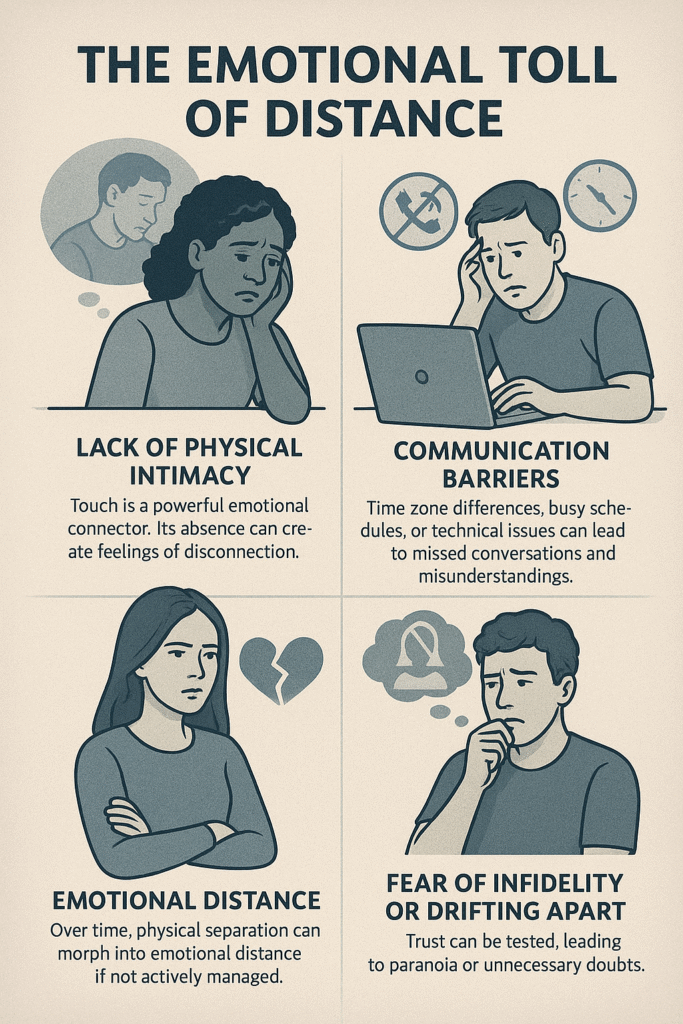
The Emotional Toll of Distance
Being physically separated from a spouse can lead to feelings of loneliness, anxiety, and insecurity. Common issues include:
- Lack of physical intimacy: Touch is a powerful emotional connector. Its absence can create feelings of disconnection.
- Communication barriers: Time zone differences, busy schedules, or technical issues can lead to missed conversations and misunderstandings.
- Emotional distance: Over time, physical separation can morph into emotional distance if not actively managed.
- Fear of infidelity or drifting apart: Trust can be tested, leading to paranoia or unnecessary doubts.
Strategies for Managing Mental Health
Despite these challenges, many couples successfully navigate long-distance marriages with intentional effort and emotional resilience. Here are some practical strategies:
1. Open and Honest Communication
Regular, transparent conversations are the foundation of trust. Don’t just talk about your day—share your feelings, fears, and aspirations. It’s okay to be vulnerable. Using video calls, voice notes, or even hand-written letters can make communication feel more personal.
2. Create a Routine
Having a consistent routine for calls or virtual dates can provide a sense of stability. It reduces uncertainty and gives both partners something to look forward to, helping with emotional regulation.
3. Set Goals for Reunions
Knowing when you’ll be together again can significantly ease emotional strain. Even if reunions are months apart, having a plan in place can reduce anxiety and foster hope.
4. Invest in Personal Growth
Use the time apart to focus on individual goals, hobbies, or self-care routines. This not only boosts self-esteem but also brings fresh energy to the relationship when you reconnect.
5. Seek Support When Needed
Talking to a therapist or joining support groups for long-distance couples can be very helpful. Sometimes, having a neutral third party to talk to provides clarity and emotional relief.
6. Build Trust Intentionally
Trust is the backbone of any long-distance relationship. Be consistent in your behavior, avoid secrecy, and reassure your partner of your commitment.
7. Practice Gratitude
Focusing on what’s good in your relationship, even from a distance, can shift your mental focus from lack to abundance. Celebrate small wins and express appreciation for your partner often.
Recognizing When Help is Needed
It’s normal to feel low occasionally, but persistent symptoms like chronic sadness, irritability, loss of interest in activities, or trouble sleeping may signal more serious mental health issues. If either partner is struggling, seeking professional help is not just beneficial—it’s essential.
Final Thoughts
Distance in a marriage doesn’t have to mean disconnection. With mutual effort, clear communication, and strong emotional support, couples can not only survive long-distance marriages but thrive in them. Mental health plays a pivotal role in this journey, and prioritizing it is a sign of strength, not weakness.
