

Hair Loss, is common among males and females, but it becomes a problem when it impacts your personality. Hair loss is also known as alopecia Aerata. It has significant psychological and emotional impacts—personality and appearance changes with your hair type. You look more adorable and attractive if you have healthy strong hair. Any condition that leads to hair loss must be treated early to prevent permanent hair loss.
Here we will find complete detailed information about hair loss symptoms, causes and treatment.

Stages of baldness in males
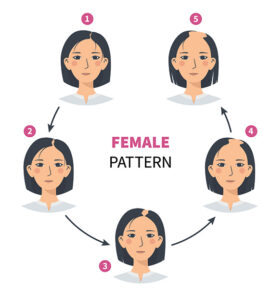
Stages of bald
Types of Hair Loss
Many types of hair loss and alopecia are listed below:
Acute (Telogen Effluvium)
When you experience excessive loss of hair other than the daily loss of a few hairs, it is Acute hair loss, often known as telogen effluvium. It is characterized by a sudden and diffuse shedding of hair from the scalp. When you comb or tangle your fingers the hair is in your hand! So what makes this hair loss? It usually occurs within three months of any triggering event but is temporary. This type of hair loss is commonly associated with factors such as:
- Pregnancy
- High fever
- Weight loss due to dieting
The hair follicles prematurely enter the resting phase (telogen phase), leading to loss of hair. The good news is that the hair typically regrows within three to six months after the underlying cause is resolved.
Chronic (Chronic Telogen Effluvium)
Chronic telogen effluvium is similar to acute telogen effluvium, but it persists over an extended period. It often occurs in middle age, and while its exact cause remains elusive, it involves prolonged and excessive hair shedding without apparent scalp abnormalities. Chronic telogen effluvium can be triggered by:
- Hormonal imbalances
- Nutrient deficiencies
- Certain medication
Pattern Baldness (Androgenic Alopecia)
Pattern baldness, also known as androgenic alopecia, is the most common type of baldness and follows a specific pattern. In men, it typically leads to a receding hairline and balding at the crown. In women, it leads to a gradual thinning of the hair on the top of the scalp. It starts from thick healthy hair and then involves the shedding of thin hair and ends up in baldness. The common causes that may lead to this type of baldness are:
- Genetic predisposition: It is present in X-chromosome AR/EDA2R locus and the PAX1/FOXA2 locus on chromosome 20.
- Hormonal factors play significant roles in its development.
- Dihydrotestosterone (DHT), a derivative of testosterone, is thought to contribute to the miniaturization of hair follicles in susceptible individuals.
Patchy Loss (Alopecia Aerata)
It is in the form of patches and can involve any hairy area. Mostly it is present on the scalp of females sometimes it may extend to other parts. In males, it is present on the scalp, beard, eyebrows, or other hairy parts of body. It is without any symptoms and is benign. There are certain causes:
- Atopic dermatitis
- Vitiligo
- Thyroid disease
- Collagen-vascular diseases
- Down syndrome
- Psychiatric disorders – Anxiety, personality disorders, depression, and paranoid disorders
- Stressful life events in the 6 months before onset
| Type of Alopecia | Pattern | Characteristics |
| Acute Alopecia | Sudden and rapid loss | Hair may fall out in clumps, leaving noticeable bald patches Regrowth typically occurs within a few months |
| Chronic Alopecia | Gradual and persistent hair thinning | Hair becomes progressively thinner over time, without distinct bald patches Regrowth might be slow and not as robust as original hair |
| Pattern Alopecia | Specific patterns of loss | Loss follows a distinct pattern, with receding hairline in men and diffuse thinning in women |
| Patchy Alopecia | Random, patchy loss | Circular bald patches can appear on the scalp or other hair-bearing areas |

Underlying Alopecia causes (Hair Loss )
1. Hormonal Imbalances
Hormonal fluctuations in both genders can trigger baldness. In pattern baldness, the sensitivity of hair follicles to DHT plays a crucial role. Hormonal changes during pregnancy and menopause can also lead to temporary hair loss. Temporary hair loss is reversible as when causing factors are removed then hair regrows. Women with polycystic ovary syndrome may also have complaints of hair loss from the scalp.
2. Autoimmune Conditions
Alopecia areata is a type of hair in which there are round patches of hair loss. It is believed to result from an autoimmune response. The immune system targets hair follicles, causing them to enter a resting phase and halt hair growth.
3. Medical Conditions
Underlying medical conditions like thyroid disorders (hypothyroidism), pituitary gland dysfunction (hypopituitarism), and adrenal gland disorders (hypoadrenalism) can disrupt the hormonal balance and lead to hair loss.
4. Nutritional Deficiencies
If you are in the habit of severe dieting for weight loss then you will be facing the problem of loss of hair too. Because inadequate intake of essential nutrients, such as iron and zinc, can compromise hair health and contribute to baldness. Iron deficiency, in particular, can lead to a type of hair loss known as telogen effluvium. It is mostly present in women with anemia due to heavy menstruation and pregnancy.
5. Medications and Medical Treatments
Certain medications, like chemotherapy agents, are known to cause hair loss. Chemotherapy targets rapidly dividing cells, which include hair follicles. Hair loss during chemotherapy is usually temporary, and hair tends to regrow after treatment.
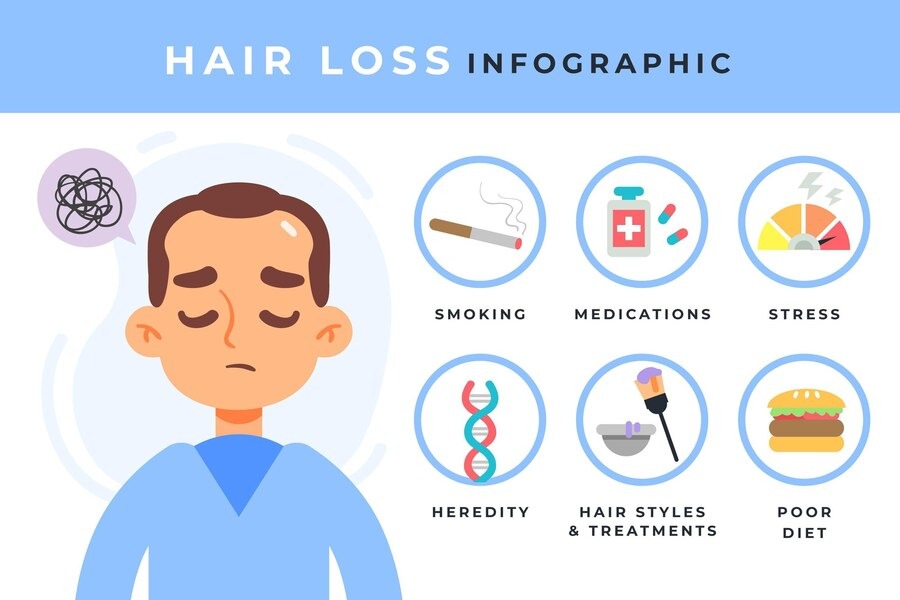
Approaches for Hair Loss Treatment
Non-Pharmacological Approaches :
Lifestyle Modifications: Adopting a well-balanced diet rich in essential nutrients, managing stress, and practicing proper hair care can support overall hair health.
Avoiding Triggers: Identifying and addressing triggers such as crash diets, excessive heat styling, and harsh hair treatments can prevent further hair loss.
Pharmacological Interventions :
Topical Minoxidil: Minoxidil, a vasodilator, is applied directly to the scalp. It promotes hair growth by prolonging the anagen (growth) phase of the hair cycle. It is recommended mostly in Pattern alopecia, as it is an androgen-independent hair growth stimulator.
Oral Finasteride: Finasteride inhibits the conversion of testosterone to DHT, thereby reducing the impact of DHT on hair follicles. It’s more commonly used in male pattern baldness.
Surgical Interventions :
Hair Transplantation: Hair transplantation involves relocating healthy hair follicles from areas of the scalp with abundant hair to areas with thinning or balding. This surgical procedure can provide a long-lasting solution for hair restoration. Its results are cosmetically satisfactory in pattern alopecia.
Treatment for Alopecia Areata (Immunotherapy)
Topical Immunotherapy: Substances like diphencyprone are applied to the scalp to provoke an immune response, potentially stimulating hair regrowth in cases of alopecia areata. Janus kinase (JAK) inhibitors effectively stimulate hair growth. The US Food and Drug Administration (FDA) approved ritlecitinib for the treatment of severe alopecia areata in people ages 12 and older. It is the second JAK inhibitor approved for treating alopecia areata (AA) following approval last year in June of baricitinib (Olumiant), for alopecia areata in adults. Ritlecitinib is the first JAK inhibitor approved for children ages 12 and older with AA.
Prognosis:
We don’t know for sure what will happen with androgenetic alopecia. In some people, it gets so bad that they lose almost all the hair on their heads. For others, their hair thins out in certain ways, but they still keep quite a bit of hair on their head. Women with this condition, usually notice their hair getting thinner on the top of their head, rather than going completely bald. All types of alopecia must be differentiated for better treatment and management.
Seeking Professional Guidance
Although loss of hair is seen commonly and sometimes it is not associated with underlying disease in certain conditions it should not be overlooked. Given the complexity of hair fall and its various underlying factors, seeking professional guidance from a dermatologist or a healthcare provider experienced in hair disorders is essential. They can perform a thorough evaluation, including medical history, physical examination, and possibly laboratory tests, to determine the specific cause of the disorder and recommend an appropriate treatment plan.
Conclusion
Hair loss results from different conditions that might be a genetic predisposition to hair fall, diet, or lifestyle. Each with its unique causes and characteristics must be ruled out. Whether it’s the sudden shedding of acute telogen effluvium, the persistent thinning of chronic telogen effluvium, or the distinct pattern of androgenic alopecia, understanding the root causes is paramount for effective treatment. While some forms of hair loss are temporary and self-resolving, others may require medical intervention. By exploring a range of treatment approaches, individuals can regain confidence in their appearance and enjoy healthier, fuller hair. Remember, the first step toward addressing hair loss is consulting a medical professional who can guide you on the most suitable path for your specific condition.
