

Before knowing Endocarditis Guidelines, let understand more specifically about infective endocarditis which is a serious condition that involves an infection of the inner lining of the heart, often targeting the heart valves. Although it is relatively uncommon, it can lead to severe complications, especially in individuals with specific heart conditions.
Understanding who is most vulnerable to this infection is essential for prevention and early treatment. According to the National Institute for Health and Care Excellence (NICE) guidelines, not all heart issues carry the same level of risk. Let’s explore who falls into the higher-risk category and how you can manage that risk effectively.
Who is at Higher Risk of Infective Endocarditis?
Certain heart conditions increase the likelihood of developing infective endocarditis. These include:
- Diseases that affect the heart valves – Abnormal or damaged valves can create an environment where bacteria ( Staphylococcus viridians) can easily settle and grow.
- Hypertrophic cardiomyopathy – A condition in which the heart muscle becomes abnormally thick, making it harder for the heart to pump blood effectively and increasing vulnerability to infections.
- Previous history of infective endocarditis – If you’ve had the condition before, your risk of recurrence is significantly higher.
- Certain congenital heart defects – Some structural heart problems present from birth can increase the risk, even if surgically corrected. However, patients with isolated atrial septal defects, repaired ventricular septal defects, or repaired patent ductus arteriosus are generally not considered high risk.
- Presence of prosthetic (replacement) heart valves – Artificial valves are more prone to infection compared to natural valves.

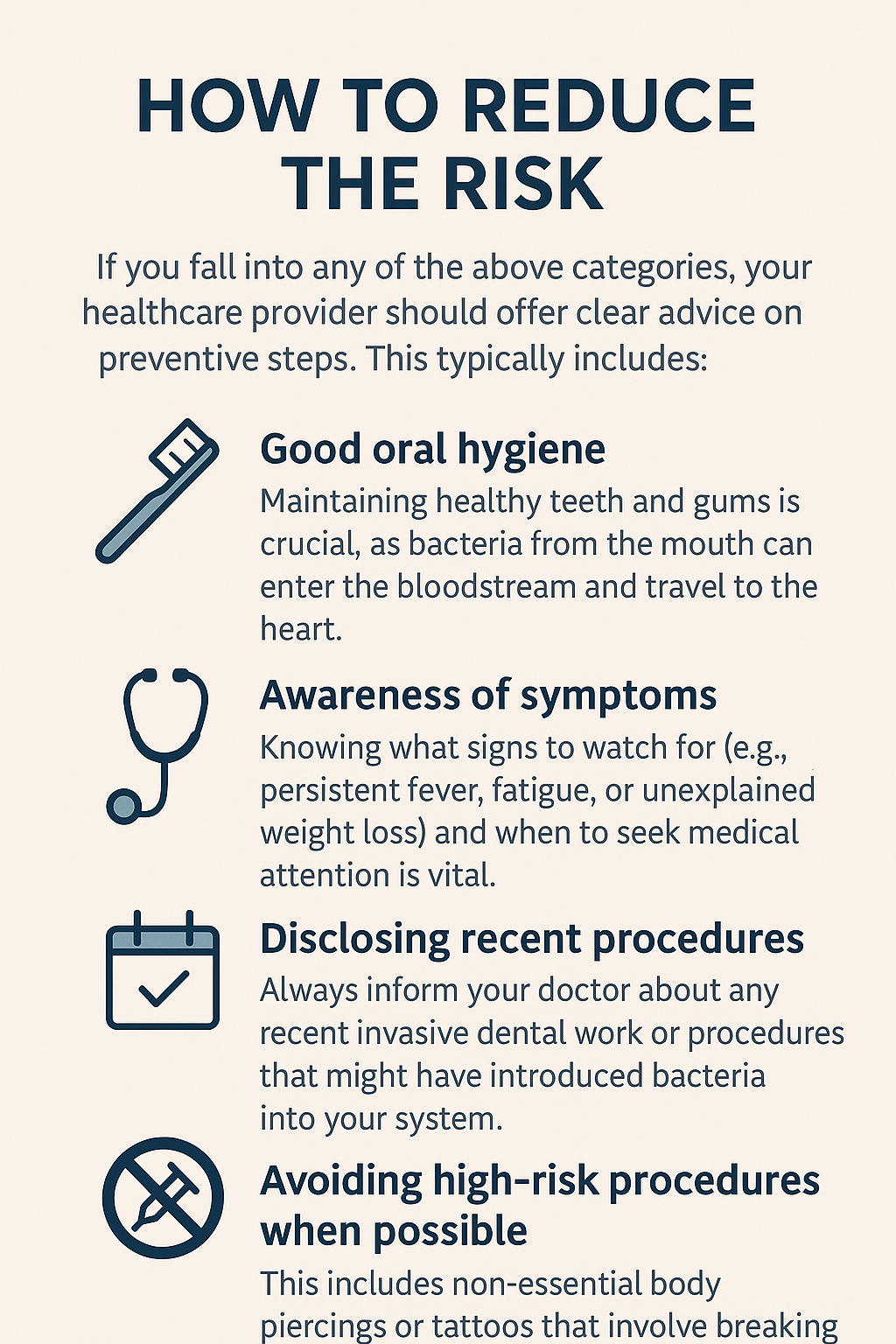
How to Reduce the Risk
If you fall into any of the above categories, your healthcare provider should offer clear advice on preventive steps. This typically includes:
- Good oral hygiene – Maintaining healthy teeth and gums is crucial, as bacteria from the mouth can enter the bloodstream and travel to the heart.
- Awareness of symptoms – Knowing what signs to watch for (e.g., persistent fever, fatigue, or unexplained weight loss) and when to seek medical attention is vital.
- Disclosing recent procedures – Always inform your doctor about any recent invasive dental work or procedures that might have introduced bacteria into your system.
- Avoiding high-risk procedures when possible – This includes non-essential body piercings or tattoos that involve breaking the skin.
Antibiotics: When Are They Needed?
Previously, it was common practice to give antibiotics before certain dental or medical procedures to people at risk of endocarditis. However, NICE guidelines have changed based on current evidence.
Antibiotics are not usually recommended before:
- Dental treatments
- Procedures related to pregnancy or the female reproductive system
- Childbirth
- Procedures involving the bladder or urinary tract
- Gastrointestinal procedures involving the oesophagus or bowels
- ENT or respiratory procedures such as bronchoscopy
When antibiotics may be considered:
If you’re undergoing a procedure at a site already suspected of having an infection (e.g., the urinary tract or gastrointestinal system), antibiotics might be prescribed. In such cases, the chosen antibiotic should be effective against the bacteria commonly associated with endocarditis, as well as those causing the suspected infection.
Why the Shift in Antibiotic Policy?
The current NICE recommendation reflects a better understanding of how endocarditis develops. Research now suggests that everyday activities (like brushing teeth or chewing food) can introduce bacteria into the bloodstream just as easily—if not more so—than medical or dental procedures. Additionally, unnecessary antibiotic use poses its own risks, such as allergic reactions and antibiotic resistance.
If you have a heart condition that puts you at increased risk of infective endocarditis, it’s important to take a proactive approach to your health. Discuss your risk factors with your doctor, maintain excellent oral hygiene, and stay informed about symptoms and preventive care.
Understanding the risks and taking sensible precautions can help prevent a potentially life-threatening infection. Always make sure your healthcare providers are aware of your medical history before any procedure or treatment
What You Need to Know About Risk and Prevention
Here’s what you need to know to stay safe and informed.
Antibiotics Aren’t Always the Answer
In the past, people at higher risk for IE were given antibiotics before certain medical or dental procedures. However, recent research shows that this may not be necessary—or effective—in most cases. The current guidelines do not recommend routine antibiotics before:
- Dental procedures
- Minor surgeries
- Procedures involving the bladder, bowels, or airways
This shift comes from growing evidence that these procedures are not the main cause of endocarditis. Also, using antibiotics unnecessarily can lead to side effects and antibiotic resistance.
Another important update: Chlorhexidine mouthwash is not recommended for preventing IE.
Daily Habits Make a Big Difference
Good oral hygiene is one of the most effective ways to prevent endocarditis—especially if you’re at risk. Brushing, flossing, and regular dental checkups help reduce harmful bacteria that could enter your bloodstream and affect your heart.
Take Infections Seriously
For people at higher risk, even a mild infection can become serious. If you have a heart condition and experience symptoms of infection—such as fever, fatigue, or pain—don’t wait. Get it checked out quickly.
If you’re undergoing a procedure and already have an infection (like a urinary tract or dental infection), your doctor may prescribe antibiotics. This isn’t to prevent IE directly but to treat the existing infection and reduce the chance of it spreading to your heart.
Why Is Endocarditis on the Rise?
Although IE is still considered rare (fewer than 10 cases per 100,000 people each year), the number of cases has been rising worldwide. Experts believe this may be due to:
- Aging populations
- Increased use of medical devices like pacemakers and artificial valves
- More people living longer with heart conditions
Who Is Most at Risk?
You may be at higher risk of developing IE if you have:
- Certain congenital heart diseases (especially complex or cyanotic types)
- Rheumatic heart disease
- A history of previous endocarditis
- Possibly, a prosthetic (artificial) heart valve or mitral valve prolapse
Some common heart defects—like a repaired atrial or ventricular septal defect—don’t appear to increase the risk significantly.
What About Outcomes?
People with certain heart conditions, such as prosthetic valves, may face more serious outcomes if they develop IE. These can include a higher risk of complications or even death. That’s why prevention and early treatment are so important.
Looking Ahead: Why Research Matters
NICE has recommended setting up a national register of endocarditis cases. This would help researchers better understand the condition and improve treatments in the future. Even though IE is rare, there’s enough data to support meaningful research that could save lives.
Final Thoughts
If you have a heart condition, don’t panic—but do stay informed. Preventing infective endocarditis starts with good hygiene, awareness of symptoms, and regular communication with your doctor.
While antibiotics aren’t the go-to prevention method anymore, taking care of your health every day is your best defense.
