
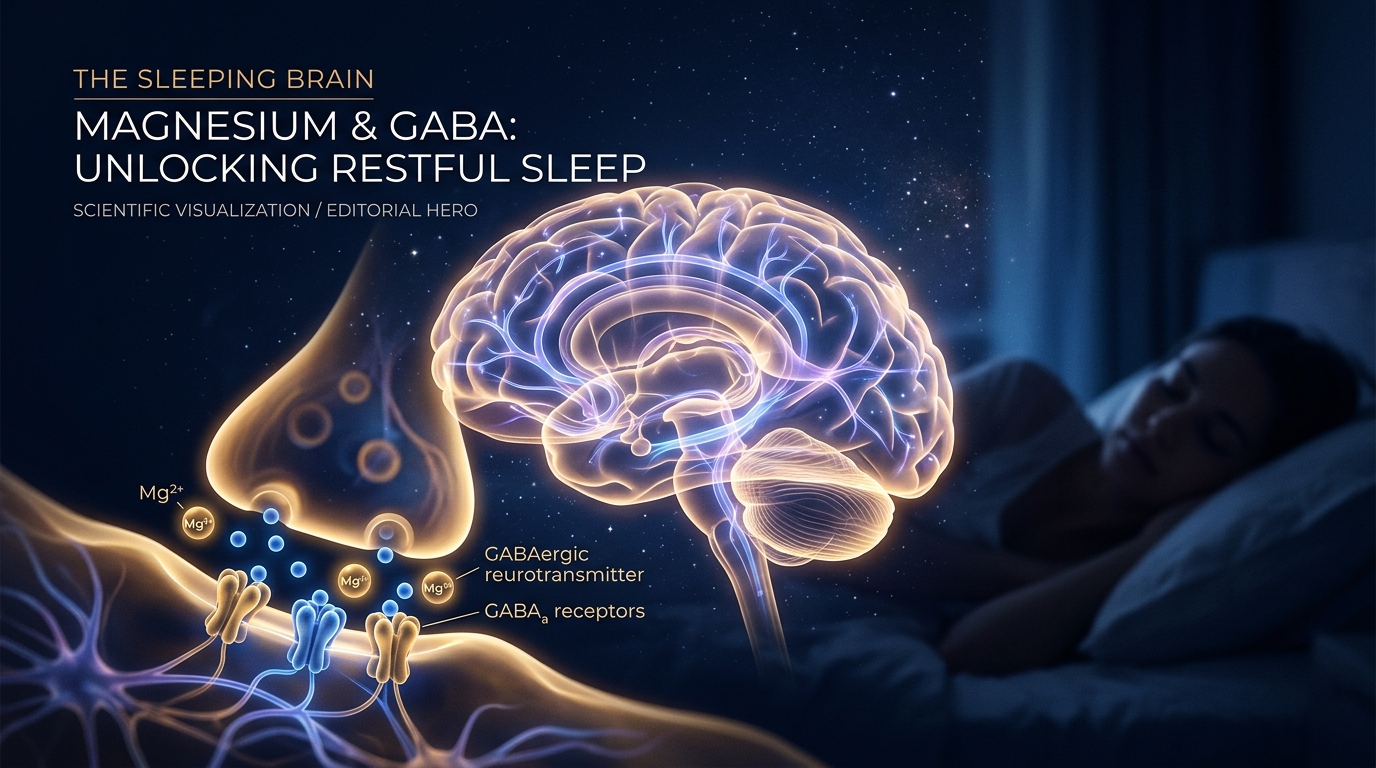
Sara wakes up every night at 3:15 AM like clockwork. Her heart feels slightly restless, her legs tense, and her mind racing despite going to bed completely exhausted. Routine blood work reveals normal melatonin, normal thyroid, and adequate ferritin. Yet, night after night, deep slow-wave sleep eludes her. What routine panels fail to evaluate is the single critical intracellular electrolyte that governs central nervous system inhibition and parasympathetic tone.
Sleep fragmentation is rarely just psychological stress or screen time. For millions of adults, recurrent nocturnal awakenings represent the direct biological signal of subclinical intracellular magnesium depletion.
The Neurochemical Gateway: Why Magnesium Governs Sleep Architecture
Sleep architecture is composed of distinct cycles alternating between Rapid Eye Movement (REM) and Non-REM deep slow-wave sleep. Deep Non-REM (Stage 3) is the restorative physiological phase during which the glymphatic system clears metabolic waste from the brain and cellular repair occurs.
To enter and sustain Stage 3 sleep, the brain must suppress excitatory neurochemistry. This suppression depends directly on Gamma-Aminobutyric Acid (GABA), the primary inhibitory neurotransmitter of the central nervous system. Magnesium serves as an obligatory allosteric modulator for GABAA receptors, binding directly to receptor sites and facilitating the influx of chloride ions that hyperpolarize neuronal membranes.
Magnesium acts as the natural biochemical brake on nocturnal brain hyperactivity. While it potentiates calming GABA receptors, it simultaneously acts as a physical plug inside NMDA (glutamate) receptors. Without adequate magnesium sitting inside the channel pore, excessive calcium floods into brain cells, causing hyper-excitability, restless nocturnal micro-arousals, and early-morning tachycardia.
Bioavailability Matters: Choosing the Correct Molecular Form
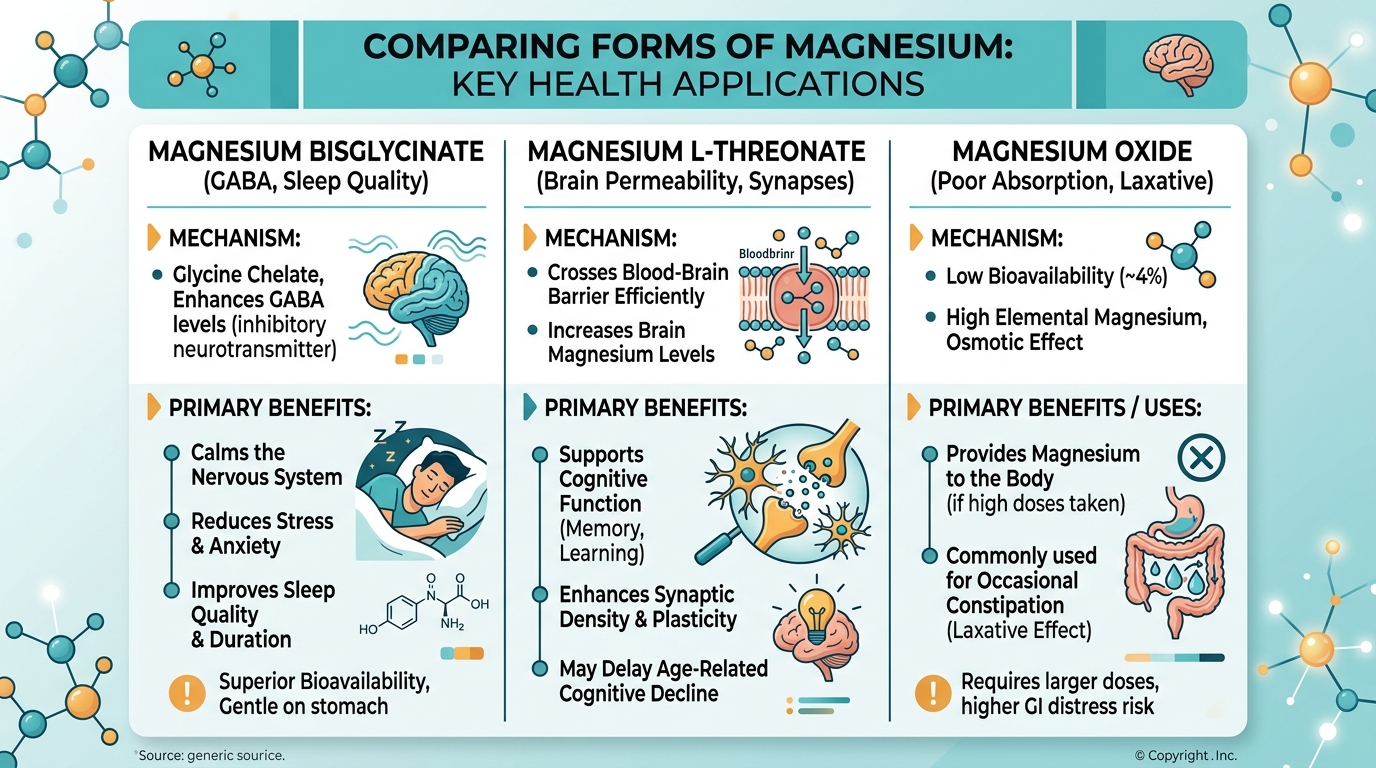
Many individuals conclude that magnesium “did not work” for their insomnia simply because they took an inappropriate chemical formulation. Commercial over-the-counter supplements vary drastically in intestinal absorption and blood-brain barrier permeability:
- Magnesium Bisglycinate: Bound to two molecules of the amino acid glycine. Glycine acts synergistically in the brainstem to lower core body temperature and promote NMDA inhibition. It offers exceptional bioavailability without inducing osmotic laxative effects. First-Line for Sleep
- Magnesium L-Threonate: A novel chelate specifically shown in peer-reviewed neuroscience trials to cross the blood-brain barrier efficiently, elevating cerebrospinal fluid concentrations and improving sleep fragmentation in cognitive fatigue. Neurological Target
- Magnesium Citrate: Moderately absorbed, but exhibits high osmotic activity that draws water into the colon, frequently disrupting sleep with nocturnal digestive urgency.
- Magnesium Oxide: Exhibits an intestinal absorption rate of under 4%. The unabsorbed compound remains in the gastrointestinal tract, acting as a purgative rather than supporting neurological tissue.
Why Standard Blood Tests Fail to Detect Intracellular Deficiency
The human body will sacrifice tissue magnesium to preserve normal serum levels at all costs. Less than 1% of total body magnesium resides in extracellular serum; 99% is sequestered within bone, muscle, and neuronal tissue. Consequently, a patient can have profound intracellular nervous system depletion while their standard basic metabolic panel reports completely “normal” serum levels.
For accurate clinical evaluation, clinicians recommend ordering a Red Blood Cell (RBC) Magnesium Test, which reflects cellular saturation over the preceding 90 to 120 days.
- Subclinical intracellular magnesium depletion is a prevalent, underdiagnosed cause of 3 AM sleep fragmentation and restless awakenings.
- Dual Neurochemical Mechanism: Magnesium activates calming GABAA receptors while physically blocking excitatory NMDA calcium channels.
- Standard Serum Tests Are Inadequate: Normal serum magnesium does not rule out neurological deficiency. RBC Magnesium provides superior diagnostic clarity.
- Form Selection Is Critical: Prioritize Magnesium Bisglycinate or Magnesium L-Threonate 30 to 60 minutes before bedtime; avoid poorly absorbed oxide salts.
- Cellular Re-saturation Timeline: Therapeutic stabilization of sleep architecture typically requires 3 to 6 weeks of continuous, targeted nutritional repletion.
