
This article is for informational purposes only and does not constitute medical advice. Always consult a qualified healthcare provider before making any changes to your care.

Nour had been sitting in the same waiting room for the third time in two years. Irregular periods, weight she could not shift no matter what she tried, hair growing where it never had before, and a tiredness that sleep did not fix. The first doctor ordered an ultrasound, reported it as normal — no obvious cysts — and concluded that whatever was happening was unlikely to be the ovary condition. The second doctor mentioned insulin resistance almost as a footnote. Nobody connected the dots. When she searched her symptoms online at midnight, the results kept pointing to PCOS — polycystic ovary syndrome — but she had been told she did not have cysts. How could it be that? She sat with her folder of inconclusive results and felt, for the first time in two years, completely invisible.
What happened to Nour has a documented cause. A landmark study by Prof. Helena Teede and colleagues at Monash University found that more than one third of women with this condition waited over two years for a diagnosis, and nearly half saw three or more healthcare providers before finally being heard. In May 2026, the root cause was formally addressed at the highest level of medicine. The condition was officially renamed. What was PCOS is now PMOS — and that change may be the most significant shift in women’s hormonal health in a generation.
Why the Name Changed — and Why It Matters to You
For decades, millions of women carried a diagnosis built on a misnomer. Polycystic ovary syndrome implied one defining feature — cysts on the ovaries — when in reality those so-called cysts are arrested follicles, not pathological growths, and many women with the condition never develop them at all. The name steered clinical attention almost entirely toward the reproductive system. Gynaecologists looked for cysts. Fertility doctors looked for ovulation problems. And the broader picture — insulin dysregulation, androgen excess, cardiovascular risk, mental health — was consistently under-investigated or missed.
In May 2026, a global consensus published in The Lancet formally documented what patients had long experienced: the term PCOS was “inaccurate, implying pathological ovarian cysts, obscuring diverse endocrine and metabolic features, and contributing to delayed diagnosis, fragmented care, and stigma, while curtailing research and policy framing.” Teede HJ et al. · The Lancet · 2026
The process behind the rename was unprecedented in rigour and scale. Over 14,360 patients and health professionals from every world region participated in iterative global surveys, modified Delphi consensus workshops, and marketing and implementation analyses spanning more than a decade. Fifty-six leading academic, clinical, and patient organisations were engaged throughout — including the Endocrine Society, the International Androgen Excess and PCOS Society, and Verity, the UK’s leading patient charity. Teede HJ et al. · The Lancet · 2026
Polyendocrine Metabolic Ovarian Syndrome. The name was agreed through a global consensus led by Prof. Helena J. Teede (Monash University), Dr. Mahnaz Bahri Khomami, Rachel Morman, and the Global Name Change Consortium, published in The Lancet on 12 May 2026. DOI: 10.1016/S0140-6736(26)00717-8
- Polyendocrine — multiple interacting hormone systems are involved, not just the ovaries. Insulin, androgens (testosterone-type hormones), and neuroendocrine signals all play a role.
- Metabolic — the condition is fundamentally a disorder of metabolism, particularly insulin processing — not only a reproductive condition.
- Ovarian — the ovaries remain part of the clinical picture, but they are one feature of a much larger syndrome, not the defining one.
“What we now know is that there is actually no increase in abnormal cysts on the ovary, and the diverse features of the condition were often unappreciated,” said Professor Helena Teede, Director of the Monash Centre for Health Research and Implementation and lead author of the Lancet paper. Endocrine Society · official press release · May 2026
The name change does not immediately alter diagnostic criteria or established treatment protocols — clinicians are not starting from scratch. What it does is reframe the entire diagnostic lens, requiring a whole-body assessment from the first appointment rather than an ovary-first approach.
What PMOS Actually Is — the Whole-Body Picture
PMOS is the most common hormonal disorder in women of reproductive age. It affects one in eight women worldwide — more than 170 million people — and its effects span the reproductive, metabolic, cardiovascular, dermatological, and psychological systems simultaneously. Teede HJ et al. · The Lancet · 2026 It is not a condition that resolves after the reproductive years. It changes its presentation across the lifespan, but it does not disappear.
The insulin connection — the engine driving PMOS
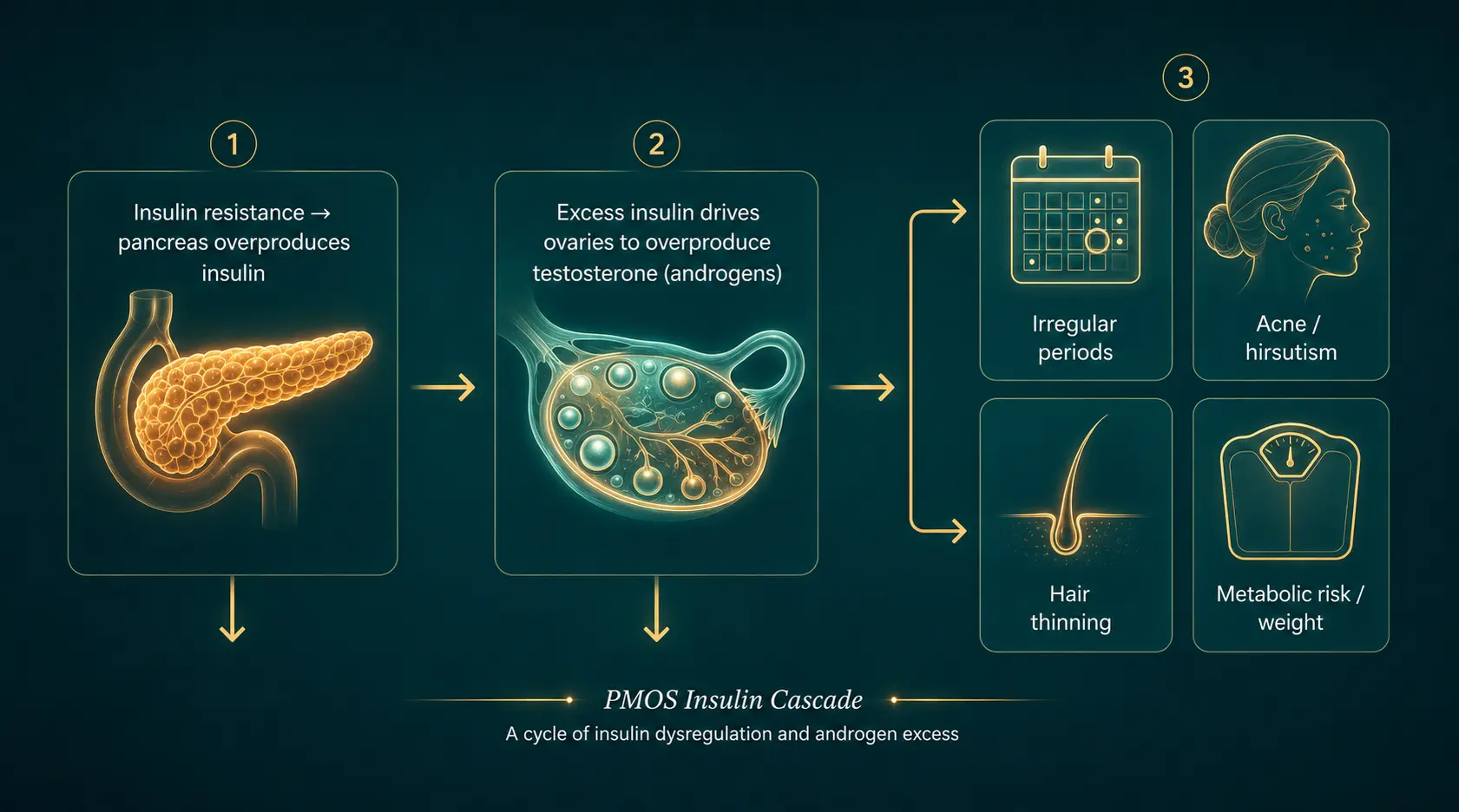
At the centre of PMOS is a disruption in how the body responds to insulin. Insulin resistance — a state in which cells stop responding efficiently to insulin, forcing the pancreas to produce progressively more of it — is present in 35 to 80 percent of women with the condition, and it occurs even in women who are not overweight. Joham AE & Teede HJ · Nat Rev Endocrinol · 2022 That excess circulating insulin then acts directly on the ovaries, stimulating them to produce excessive androgens — male-type hormones, principally testosterone.
“Renaming this condition is more than semantics; it’s about finally recognizing the full reality of what patients experience,” said Dr. Melanie G. Cree, MD, PhD, a paediatric endocrinologist at the University of Colorado Anschutz Medical Campus and co-author of the Lancet 2026 paper. “For too long, the narrow definition of PCOS has overlooked its metabolic and hormonal complexity, leaving many patients undiagnosed or misunderstood.” University of Colorado Anschutz · official press release · May 2026
High testosterone is what drives the symptoms women notice most visibly — the acne that flares along the jawline, the hair growing on the chin or chest, the thinning at the temples, and the irregular periods that make cycles feel unpredictable and fertility feel precarious.
Long-term metabolic consequences
Because PMOS is at its heart a metabolic condition, its consequences do not end with the reproductive years. A 2025 study published in Nature Medicine identified four distinct PMOS subtypes using data-driven analysis of 11,908 women across five international cohorts with 6.5-year prospective follow-up. The subtype characterised by obesity carried the most severe long-term cardiometabolic complications and the lowest live birth rates; the hyperandrogenic subtype showed the highest risk of second-trimester pregnancy loss and dyslipidaemia. Gao X, Zhao S et al. · Nature Medicine · 2025 · DOI: 10.1038/s41591-025-03984-1
The connection between PMOS and type 2 diabetes is particularly well established, with insulin resistance the shared mechanism. Elevated cardiovascular risk — through dyslipidaemia (abnormal cholesterol), hypertension, and chronic low-grade inflammation — is equally documented. These are present, measurable, and manageable risks — which the old name consistently failed to communicate to patients or their doctors.
If you have received a diagnosis and feel the weight of years of being dismissed — the appointments that felt perfunctory, the test results that never quite explained what you were living with — that experience was not in your head. It was a structural problem built into the name of the condition itself. And it is now being corrected.
Recognising PMOS — Symptoms Across the Full Body
One of the most clinically important consequences of the rename is that it widens the diagnostic entry point considerably. A woman presenting with unexplained fatigue, persistent acne, difficulty managing weight, and irregular periods — but whose ultrasound shows no notable follicle excess — can now be properly evaluated for PMOS rather than discharged with a normal result. The assessment begins with the hormonal and metabolic picture, not the imaging report.
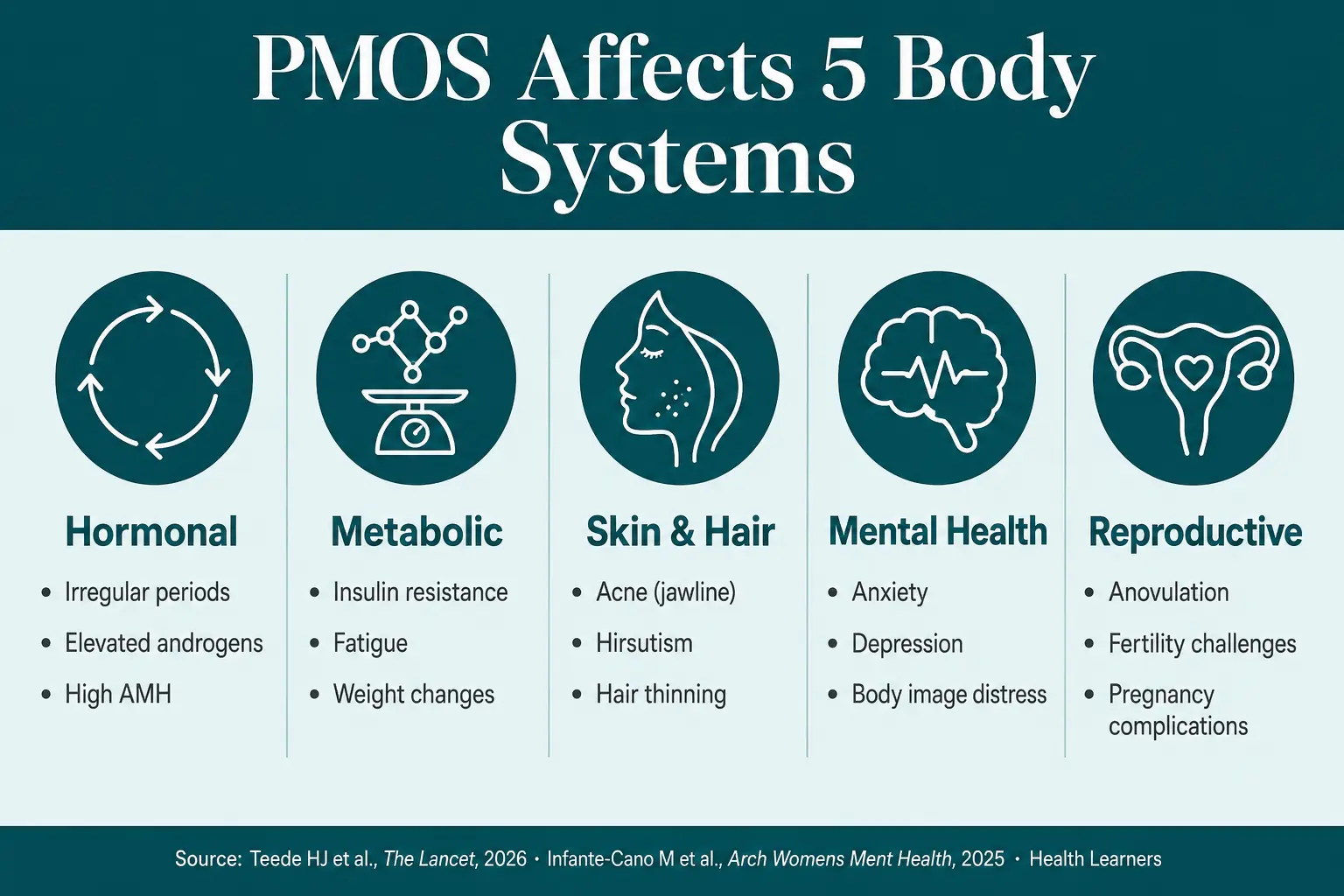
- Irregular or absent menstrual cycles — fewer than 8 cycles per year, or cycles shorter than 21 days or longer than 35
- Elevated androgens on blood testing — raised testosterone, DHEA-S, or androstenedione above the normal reference range
- Elevated anti-Müllerian hormone (AMH) — now a validated blood-based alternative to ultrasound in diagnosis van der Ham K et al. · Fertil Steril · 2024
- Disrupted LH/FSH ratio — the pituitary hormone signals to the ovaries become imbalanced, compounding ovulation disruption
- Insulin resistance — present in 35–80% of women with PMOS, independently of body weight Joham AE & Teede HJ · Nat Rev Endocrinol · 2022
- Difficulty losing weight or unexplained weight gain — particularly around the abdomen
- Persistent fatigue — often caused by blood sugar volatility rather than insufficient sleep
- Impaired glucose tolerance — detectable on an oral glucose tolerance test (OGTT) before formal diabetes develops
- Dyslipidaemia — abnormal cholesterol: low HDL, elevated triglycerides
- Hirsutism — excess facial or body hair in androgen-sensitive areas: chin, upper lip, chest, lower abdomen
- Persistent hormonal acne — particularly on the jawline, chin, and lower face, often unresponsive to standard topical treatments
- Androgenic alopecia — hair thinning at the crown or temples, or diffuse hair loss
- Acanthosis nigricans — darkened, velvety skin patches at the neck, armpits, or groin; a visible marker of insulin resistance
- Oily skin — driven by excess androgens over-stimulating sebaceous glands
- Anxiety — prevalence ranging from 32% to 69% on validated scales Infante-Cano M et al. · Arch Womens Ment Health · 2025 · PMID: 39453529
- Depression — symptom prevalence up to 46% (Beck Depression Inventory), significantly above rates in women without the condition
- Body image distress and low self-esteem — driven by visible symptoms compounded by delayed or dismissive diagnosis experiences
- Elevated sleep apnoea risk — obstructive sleep apnoea more prevalent in PMOS even at normal body weight
- Anovulation — irregular or absent ovulation; the primary mechanism behind PMOS-related infertility
- Difficulty conceiving — PMOS is the most common cause of anovulatory infertility
- Elevated pregnancy complication risk — higher rates of gestational diabetes, preeclampsia, and pregnancy loss Bahri Khomami M et al. · Nat Commun · 2024
- Heavy or prolonged periods — when cycles occur, they are often heavier or longer than average
How PMOS Is Diagnosed — What the New Framework Means for You
If you have spent years being told that your ultrasound is normal and that you therefore do not have this condition, the following matters.
PMOS is diagnosed when a person has at least two of the following three features. An ultrasound confirming excess follicles is one route — but it is not the only route, and it is not required:
- Irregular menstrual cycles — fewer than 8 per year, or outside the 21–35-day range
- Clinical or biochemical evidence of elevated androgens — a blood test showing raised testosterone or DHEA-S, or clearly visible symptoms such as significant hirsutism
- Excess antral ovarian follicles on ultrasound — still a valid and commonly used pathway, but no longer the required or primary criterion
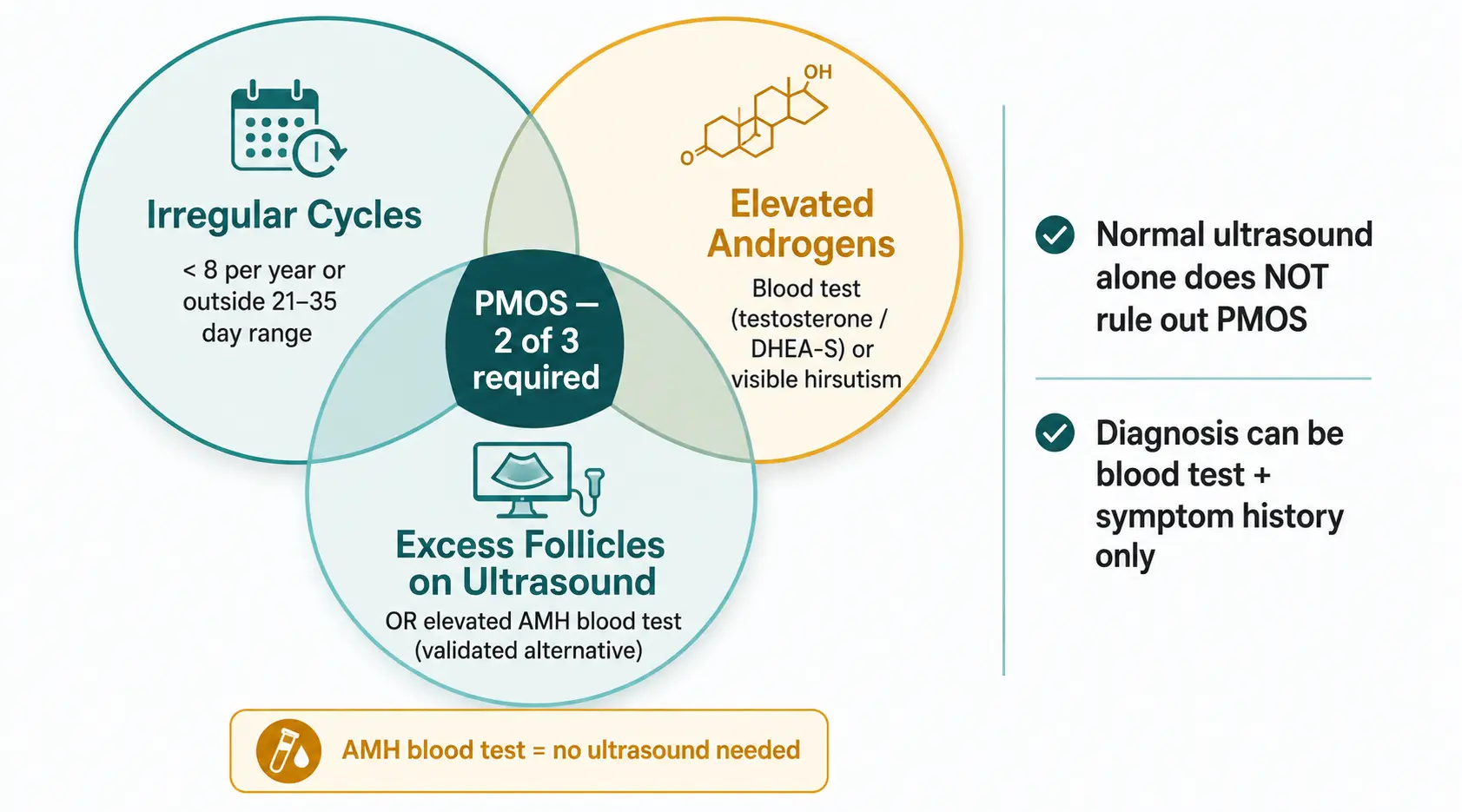
A key diagnostic development is the validated role of anti-Müllerian hormone (AMH) as a blood-based alternative to ultrasound. A 2024 systematic review and meta-analysis by van der Ham, Laven, Teede, and colleagues — conducted as part of the international PCOS guideline update — confirmed AMH as a reliable diagnostic biomarker for PMOS in adult women. van der Ham K et al. · Fertil Steril · 2024;122(4):727–739 · DOI: 10.1016/j.fertnstert.2024.05.163 This makes diagnosis more accessible, less invasive, and less dependent on imaging availability.
The PMOS framework also requires comprehensive metabolic screening as a standard part of the initial workup — not an optional extra. This includes an oral glucose tolerance test (OGTT), fasting insulin, a full lipid panel, and blood pressure measurement. These are now baseline assessments for every newly diagnosed person.
What Treatment Looks Like Under the PMOS Framework
Treatment for PMOS is shifting toward more directly addressing what drives the condition rather than managing its downstream symptoms. The older PCOS framework frequently led with hormonal contraceptives to regulate cycles, suppress androgens, and manage acne. That approach remains valid for symptom management for many people. However, it does not address insulin resistance — the central upstream driver. The PMOS framework places metabolic management at the foundation of care from the outset. Teede HJ et al. · The Lancet · 2026
Lifestyle as metabolic therapy — the foundation
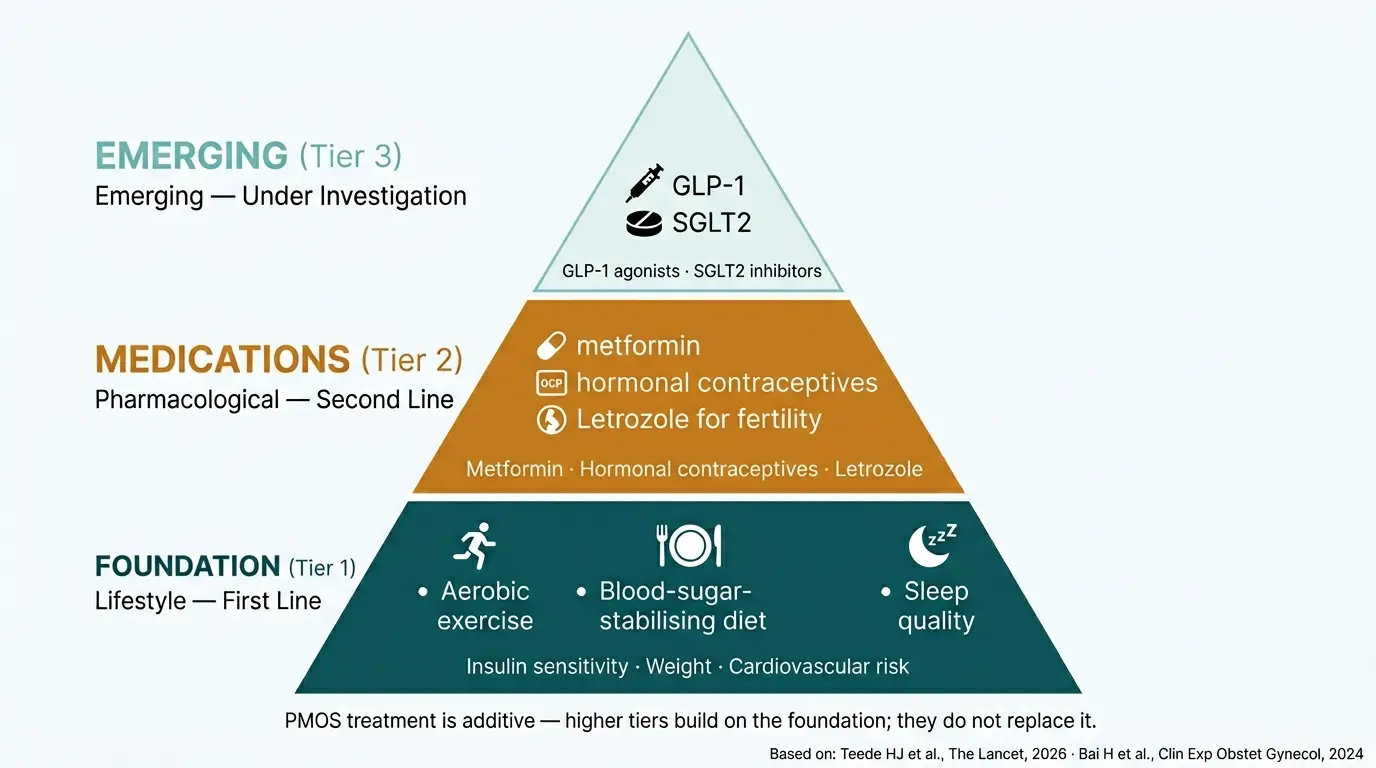
Structured exercise and dietary changes that reduce blood sugar volatility are now classified as first-line treatment — not lifestyle advice appended to a prescription, but active metabolic therapy. Regular aerobic exercise has been demonstrated to improve insulin sensitivity, fasting glucose, waist circumference, lipid profiles, and cardiovascular fitness markers in women with PMOS. Resistance training provides additional benefit by building muscle mass that acts as a metabolic sink, improving the body’s ability to use insulin effectively. Sleep quality is a recognised clinical variable: insufficient or disrupted sleep worsens insulin resistance directly, and women with PMOS are at elevated risk for obstructive sleep apnoea, even at body weights that would not typically raise clinical concern.
Medications — metformin and emerging agents
Metformin — a well-established insulin-sensitising agent — remains an important pharmacological option for PMOS, particularly where insulin resistance is confirmed or where lifestyle changes alone are insufficient. It addresses the metabolic root of the condition rather than its symptomatic consequences.
A 2024 review of treatment advances published in Clinical and Experimental Obstetrics and Gynecology documented that newer agents — including GLP-1 receptor agonists (the drug class that includes semaglutide) and SGLT2 inhibitors — are now under active clinical investigation for PMOS management, given their established benefits for insulin sensitivity, weight, and cardiovascular risk reduction. Bai H et al. · Clin Exp Obstet Gynecol · 2024;51(5):126 · DOI: 10.31083/j.ceog5105126 These are not yet first-line treatments for most patients, but they represent a rapidly evolving area of evidence.
For fertility
Where pregnancy is the goal, the metabolic framing of PMOS offers a meaningful advantage in how care is sequenced. Addressing insulin resistance first can restore spontaneous ovulation in some women before any fertility medication is needed. Where ovulation induction is required, letrozole — an aromatase inhibitor — is the current first-line evidence-based option, supported by data showing better live birth rates and lower multiple pregnancy rates compared with older alternatives. Bai H et al. · Clin Exp Obstet Gynecol · 2024
Mental health — a core part of care, not an afterthought
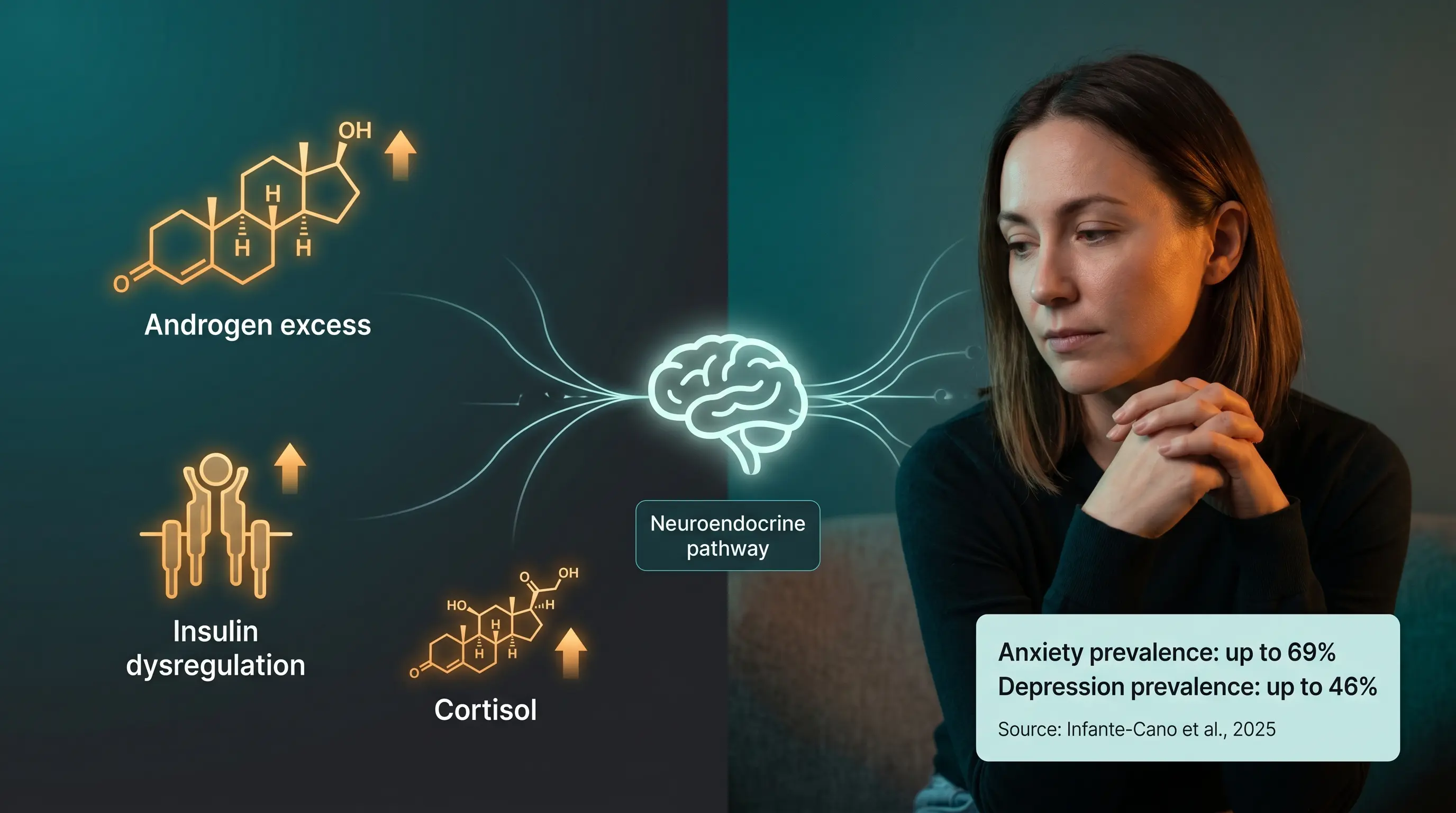
The mental health dimension of PMOS warrants proactive attention in treatment planning. Anxiety and depression in PMOS are driven not only by visible symptoms and the frustration of a long-delayed diagnosis, but by the hormonal environment itself — androgen excess and insulin dysregulation both have documented neurobiological effects. Infante-Cano M et al. · Arch Womens Ment Health · 2025 · PMID: 39453529 Treating the metabolic and androgenic drivers may improve psychological wellbeing, but psychological support should be offered as a standard component of care — not a referral made only once other symptoms have been addressed.
Key Takeaways
- PMOS (polyendocrine metabolic ovarian syndrome) is the official new name for PCOS, published in The Lancet on 12 May 2026 following a 14-year global consensus led by Prof. Helena Teede of Monash University.
- The name change reflects that the condition is a whole-body hormonal and metabolic disorder — not primarily defined by ovarian cysts, which are not a core diagnostic feature.
- PMOS affects 1 in 8 women worldwide (170 million+). More than one third waited over two years for a diagnosis under the old framework.
- Diagnosis requires two of three criteria: irregular cycles, elevated androgens (blood test or symptoms), or excess follicles on ultrasound. A normal ultrasound alone does not rule it out.
- AMH blood testing is now a validated alternative to pelvic ultrasound in the diagnostic pathway, confirmed by a 2024 systematic review in Fertility and Sterility.
- Insulin resistance is present in 35–80% of women with PMOS regardless of body weight — treating it is the foundation of the new care framework.
- A 2025 Nature Medicine study of 11,908 women identified four distinct PMOS subtypes with different long-term metabolic and reproductive risk profiles.
- If you were diagnosed with PCOS, you have PMOS. The biology has not changed — only the name, and the clinical framework that comes with it.
